
Call time was 7 a.m.
Wrap time, according to the schedule I’d been staring at for a week, was somewhere past midnight. And somewhere in the middle of all that, I had to sit down, edit, and deliver a same day edit video that would play on a giant screen in front of a few hundred people who had already been celebrating for two days straight.
I’m 47 years old. I looked at that timeline and thought, honestly, there’s a real chance I don’t make it.
Spoiler: I made it. The video played. People screamed. I’ll get to that.
But let’s back up seventeen years first.
It Started in Mumbai, 2009
My first Hindu wedding was in Mumbai. Arish and I shot it together, back when we understood the technical side of weddings and almost nothing about this particular culture.
What we walked away with wasn’t a lesson about lighting.
It was the way the family absorbed us. They fed us. They pulled us onto the dance floor. They introduced us to relatives like we were relatives. By the end we weren’t the vendors in the corner, we were two guys from the Philippines who had somehow been adopted mid-ceremony.
So much fun. So much dancing. We were hooked, and we’ve been chasing that feeling ever since.
A Thousand Weddings Later
Since Mumbai, I’ve shot over a thousand weddings.
I’m based in Dubai, and the honest truth is that most of the Indian weddings we cover happen right here in the UAE. There’s a stretch of the calendar every year where my entire team runs on biryani, adrenaline, and roughly four hours of sleep, and we wouldn’t trade it. Dubai does Indian weddings at a scale you have to witness in person to believe.
Beyond that, we’ve followed these celebrations across the Middle East, back to India, over to Thailand, into Europe, down to Sri Lanka. Palaces. Beaches. Ballrooms. That one venue where the generator was louder than the DJ and I had to lip-read the coordinator for six hours.
Here’s why I keep saying yes.
Indian weddings are the most fun weddings on the planet, and I say that with a large and completely unbiased sample size. It’s the color, which does half my job before I even lift a camera. It’s that nobody stands around waiting to be told when to enjoy themselves. Somebody is dancing before the ceremony has technically started. Somebody’s uncle is dancing better than the groom, and he knows it, and he is making sure the rest of the room knows it too.
And the food. I could write an entire separate blog post about the food, and MJ would have to take my laptop away.
So after seventeen years and a long list of countries, here’s the gap in my career I never noticed until it closed: I had never shot an Indian wedding in the Philippines.
My own hometown. Like a chef who’s cooked in twelve countries and never once made dinner at his mom’s house.
Then Dhiren and Meg came along.
I said yes before I read the full schedule. Rookie move. Best decision I made all year.
The Prewedding at La Luz, Batangas (The One I Missed)
Full disclosure: I wasn’t there for this part.
The prewedding shoot happened months earlier at La Luz in Batangas, covered by our Philippine team and led by MJ.
Let me tell you about MJ, because she’s a big reason this wedding happened at all.
She started working with me in Dubai back in 2015. Years of long weddings, weird hours, and the kind of pressure that either bonds people permanently or ends the working relationship by Tuesday. Ours bonded. Then the pandemic hit, she had to move back to the Philippines, and I remember thinking that was the end of a chapter I wasn’t ready to close.
So we opened a Philippine branch instead. She runs it. She’s been running it ever since, and she is the person I trust most on the ground here.
When the La Luz files came through, I studied them like game tape. A prewedding session isn’t really about the pretty photos, although MJ and her team absolutely got those. It’s about learning how a couple moves around each other. Who leans in first. Who makes the other one laugh, and how they do it. By the time I flew in for the wedding days, I already knew how Dhiren and Meg behaved when no crowd was watching, because MJ had captured exactly that.
That’s what a real branch looks like. Somebody you’d hand your reputation to without checking in twice.
Day 1: The Hindu Temple in Paco, Manila
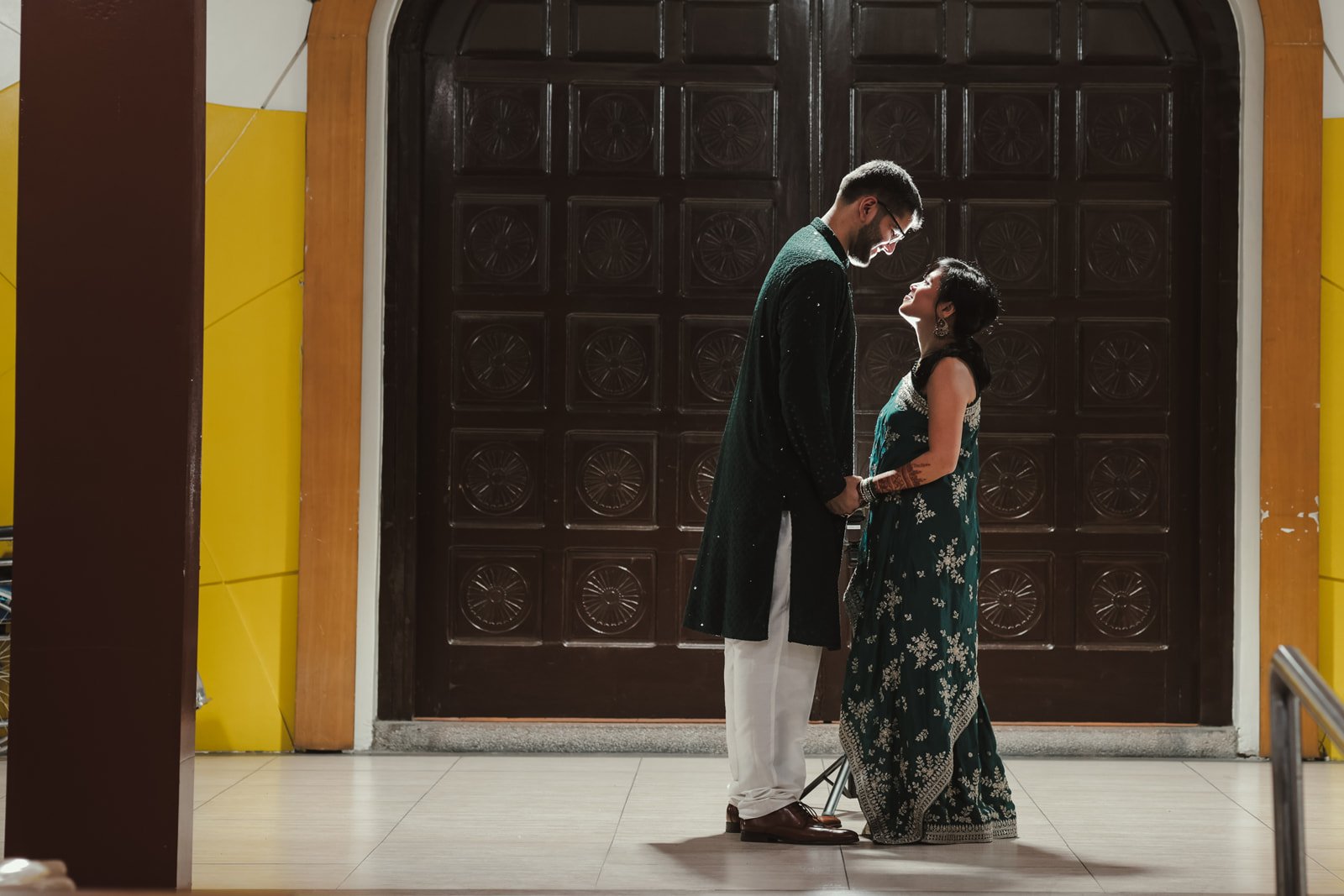
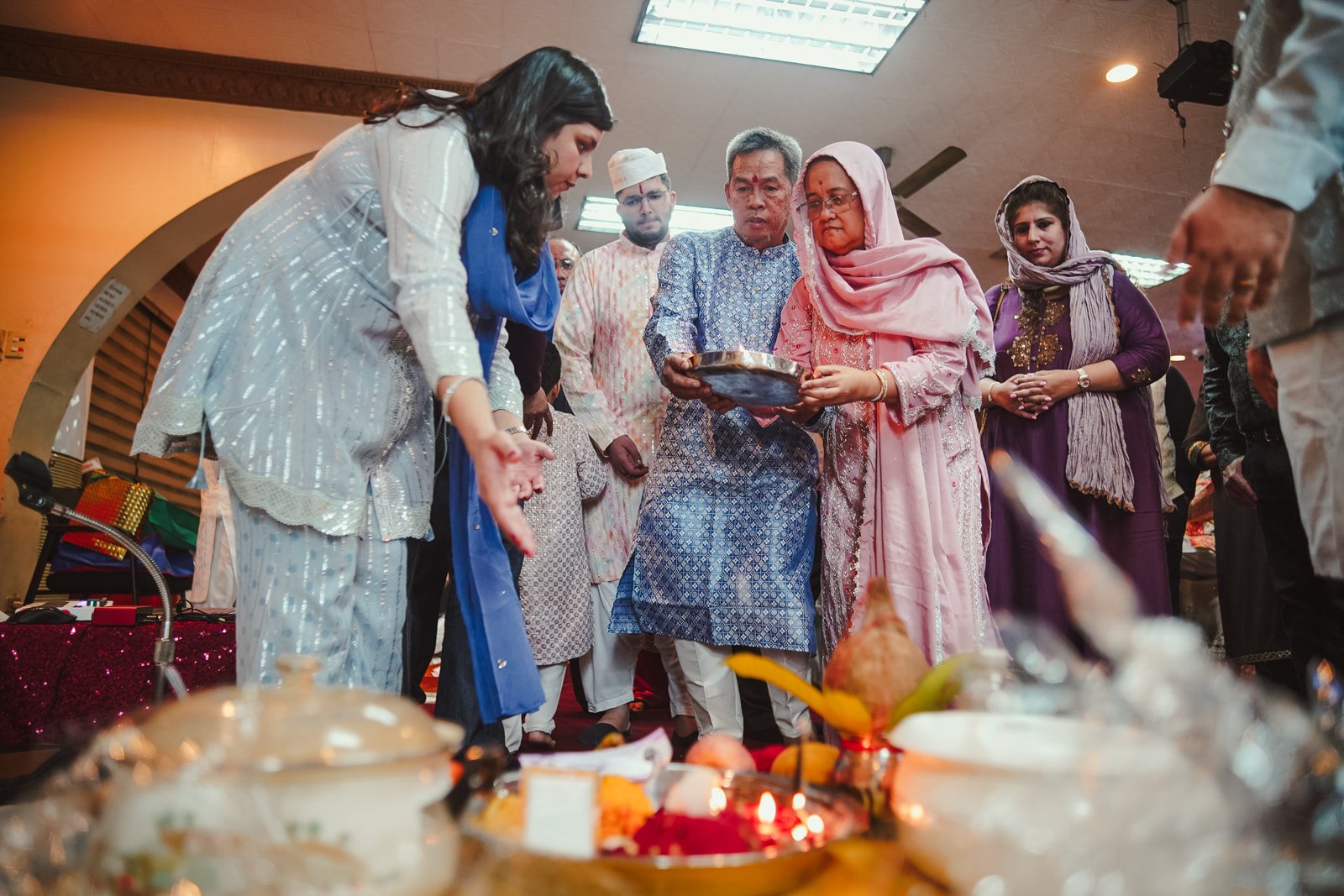
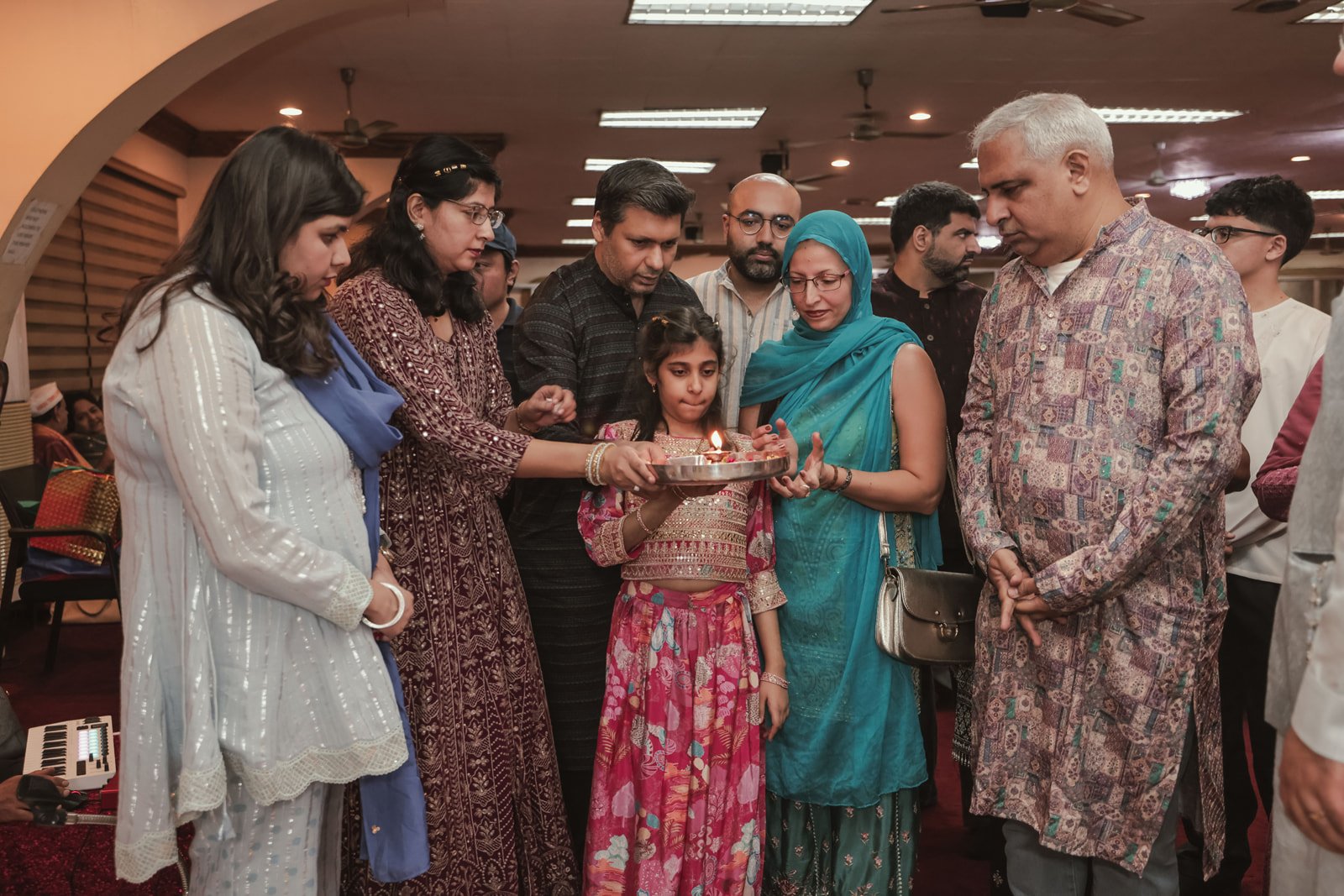
Day one was at the Hindu temple in Paco, Manila. A simple celebration, and completely soaked in color.
The rituals were the familiar ones I’ve watched play out across half a dozen countries by now. Though “familiar” is doing heavy lifting in that sentence, because there are more than a thousand rituals in a Hindu wedding.
A thousand. Sit with that. I’ve been doing this since 2009 and I’m still meeting new ones.
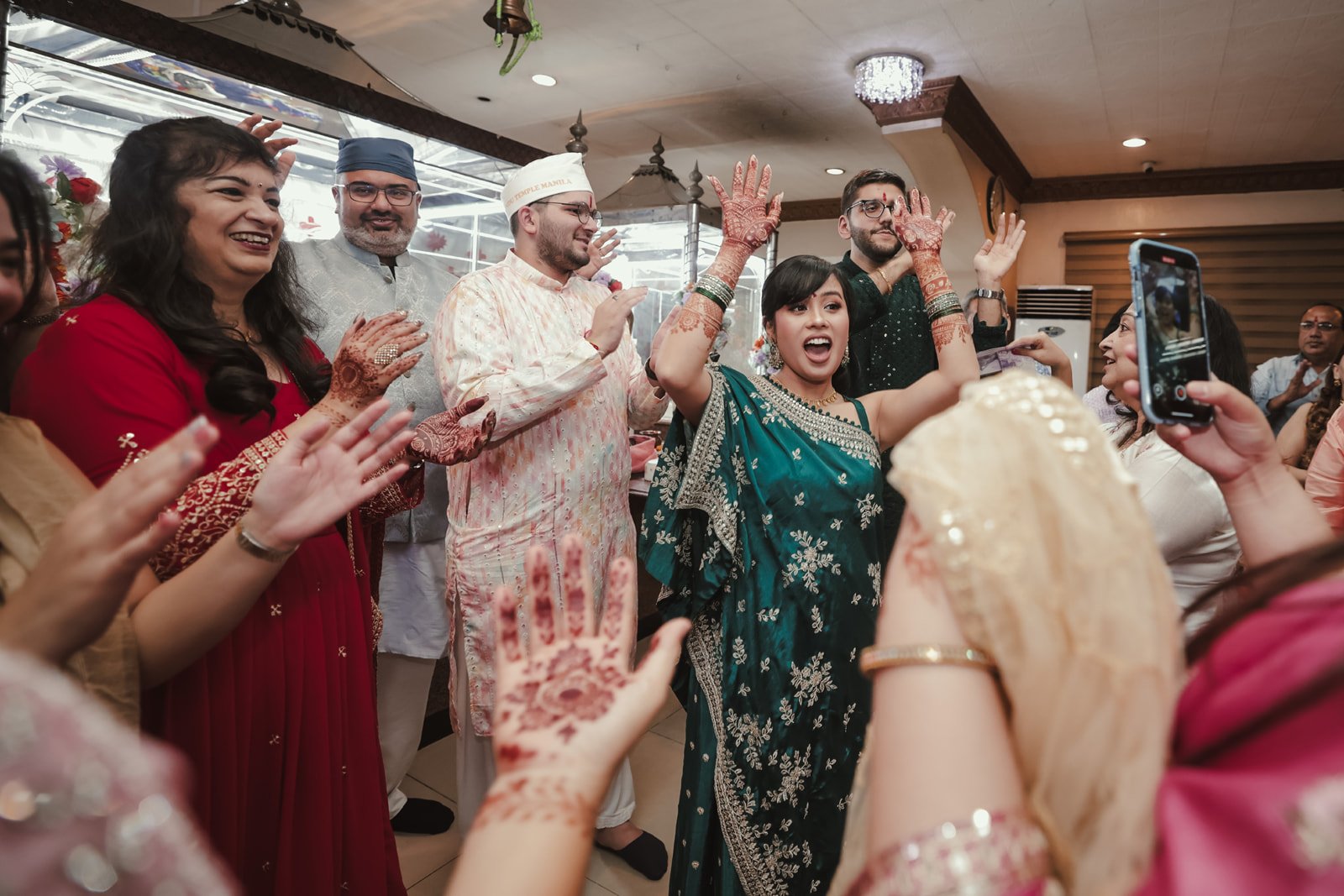
And of course, a bit of dancing from everybody. There is always dancing. I’ve stopped treating it as a scheduled item and started treating it as weather.
Day 2: The Mehendi in Magallanes, Where the Power Went Out
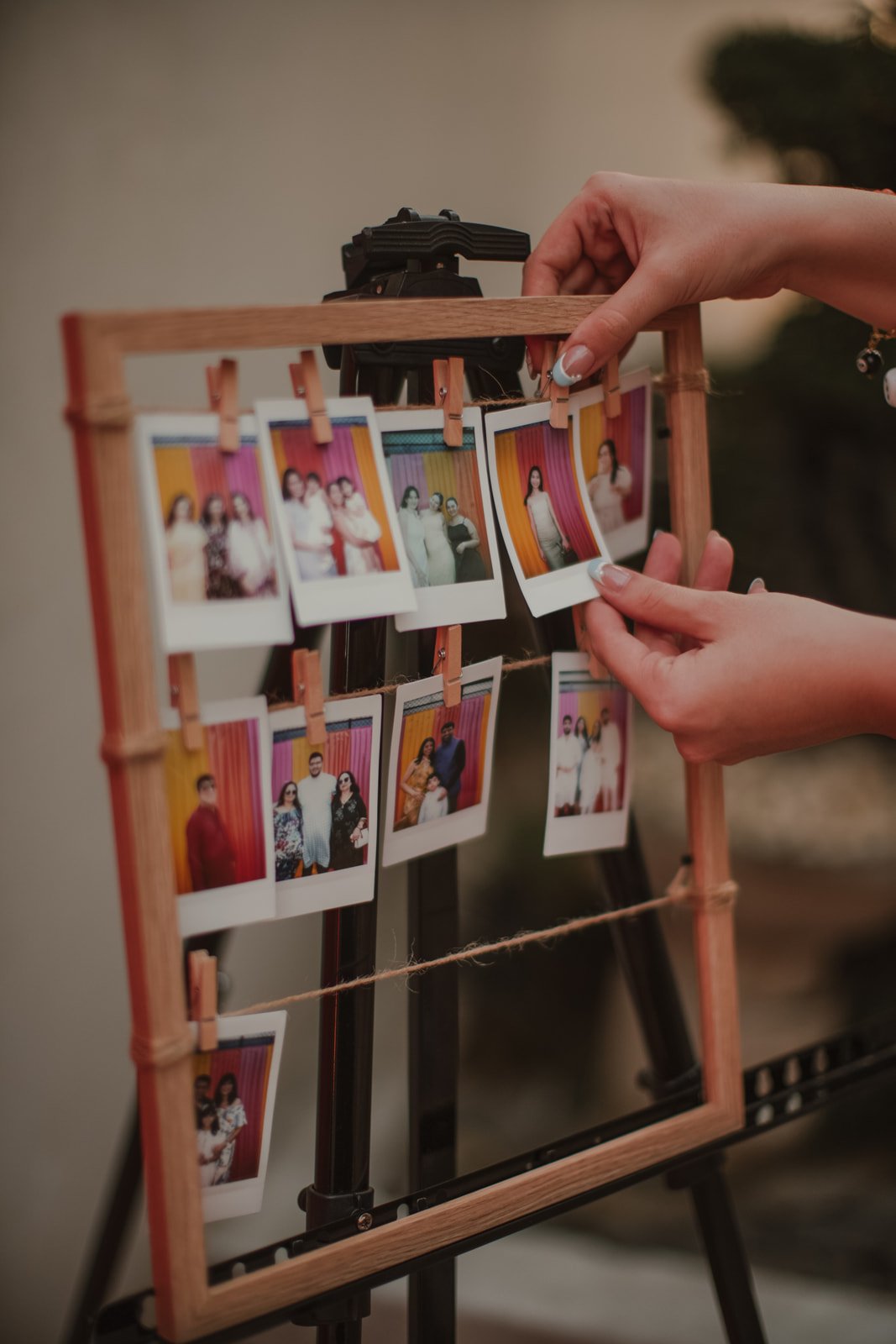
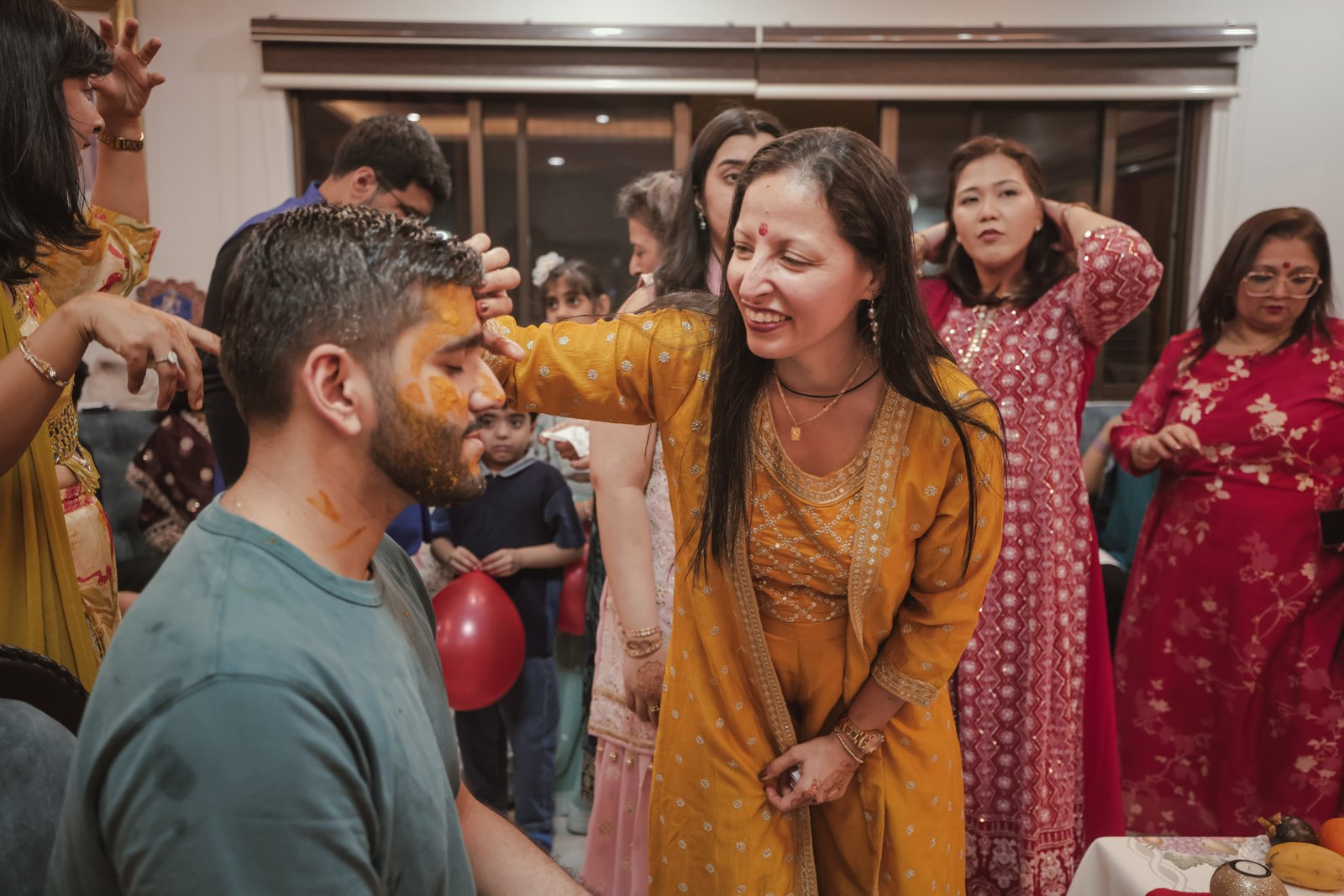
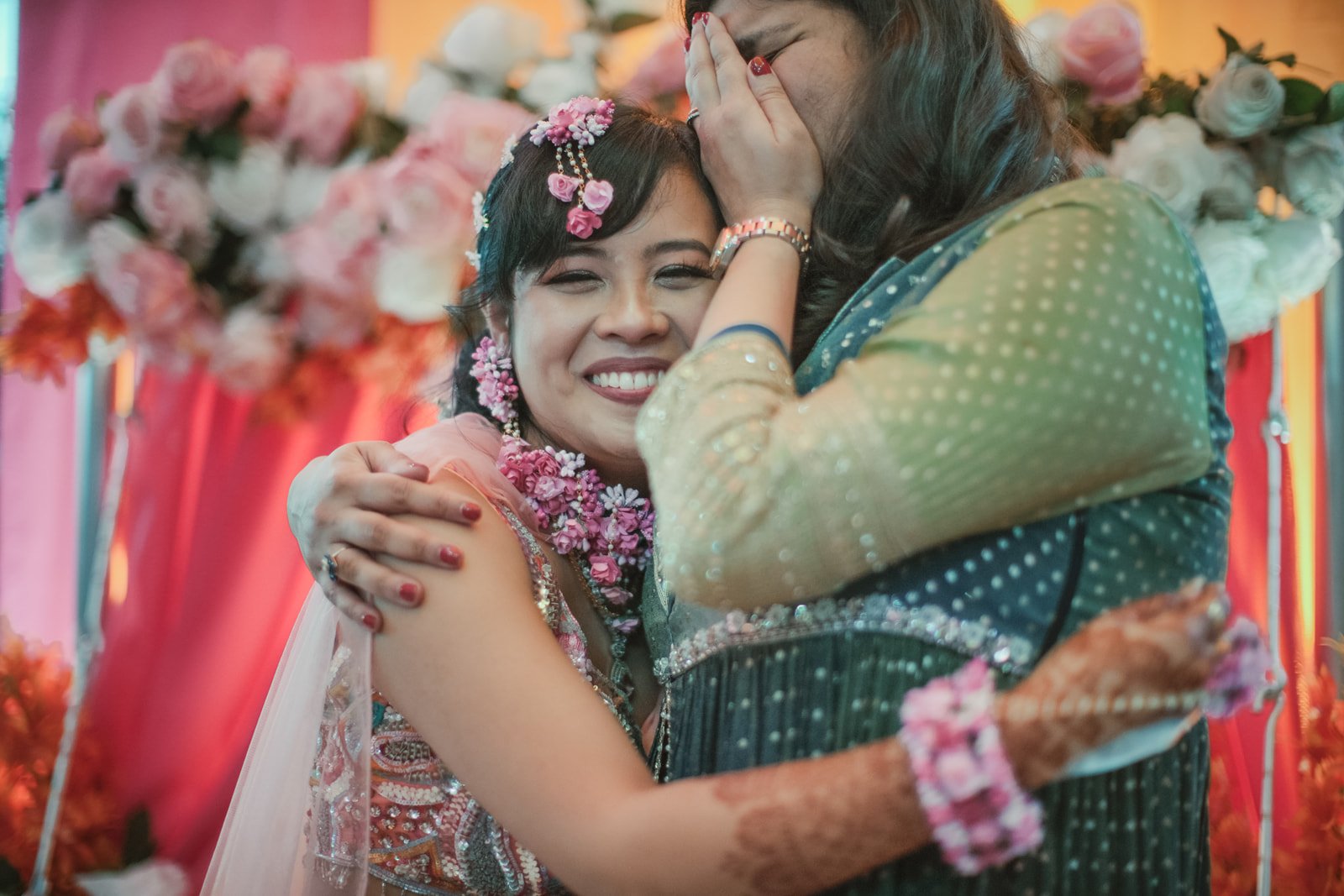
Day two was the mehendi in Magallanes Village, and this is the day I’ll still be telling people about in ten years.
First, the blackout.
If you want to know what a family is actually like, don’t watch them when things are going well. Watch them when the circuit breaker short-circuits and the entire venue loses power twenty minutes before the event starts.
Lights out. Sound system dead. Guests arriving. This is normally the part where somebody starts yelling, somebody starts crying, and the photographer quietly begins calculating how to light an entire event using phone flashlights and prayer.
Instead, the family shrugged and said: if there’s no electricity, the party still goes on.
I need you to understand how rare that response is. I’ve watched a wedding nearly implode because a cake was forty minutes late. These people looked at total darkness and decided it wasn’t allowed anywhere near their joy.
By God’s grace, the crew from the electric company turned up and fixed it. The mehendi went ahead exactly as planned, and honestly the family would have been fine either way.
Everybody Danced. Including Me.
Here is where the day got completely out of hand, in the best possible way.
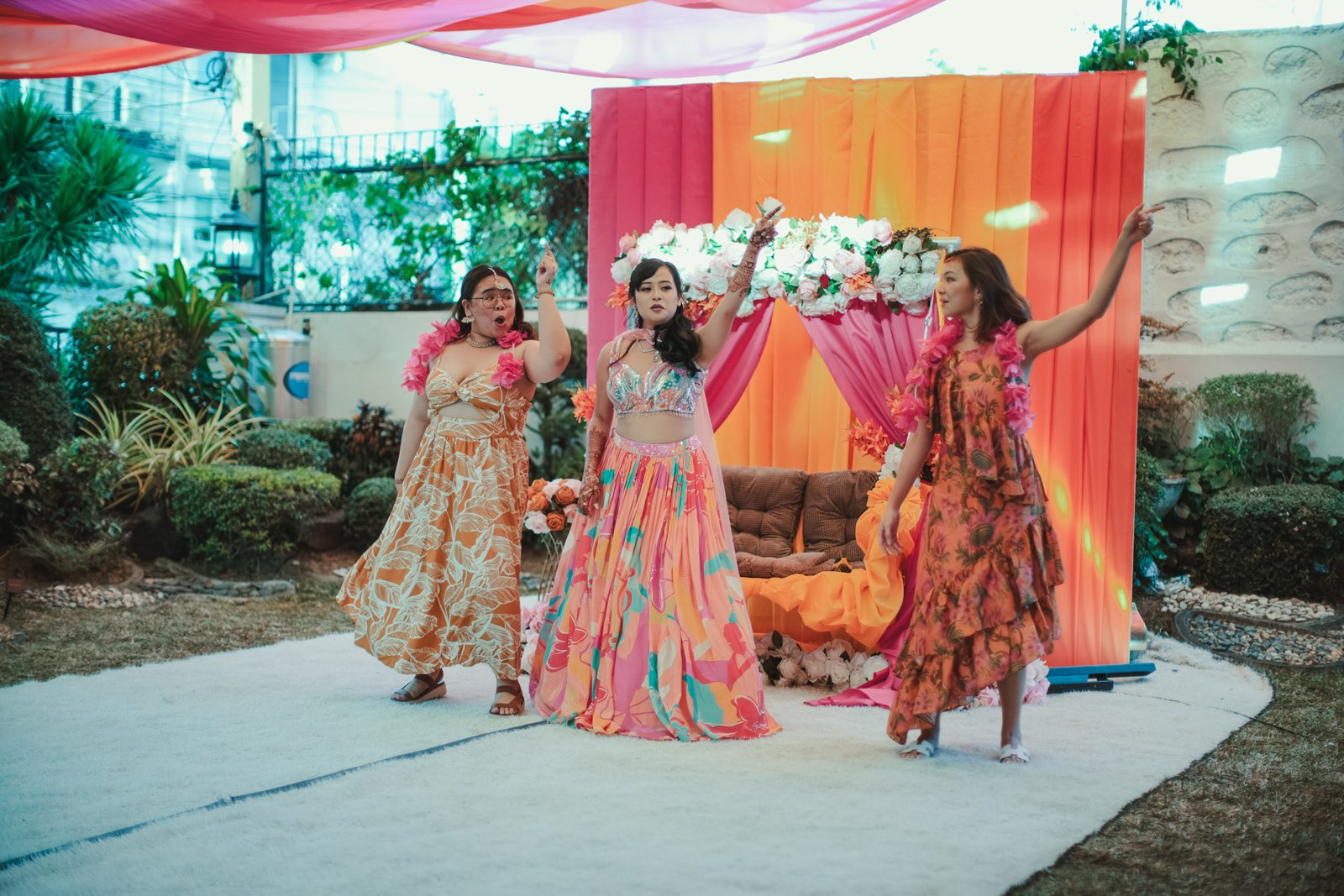
Almost everyone performed. Guests. Family. Leah and I performed.
If you have never watched a 47-year-old wedding photographer attempt choreography he learned earlier that same afternoon, I want you to know that footage exists, that I do not control it, and that I have made my peace with this.
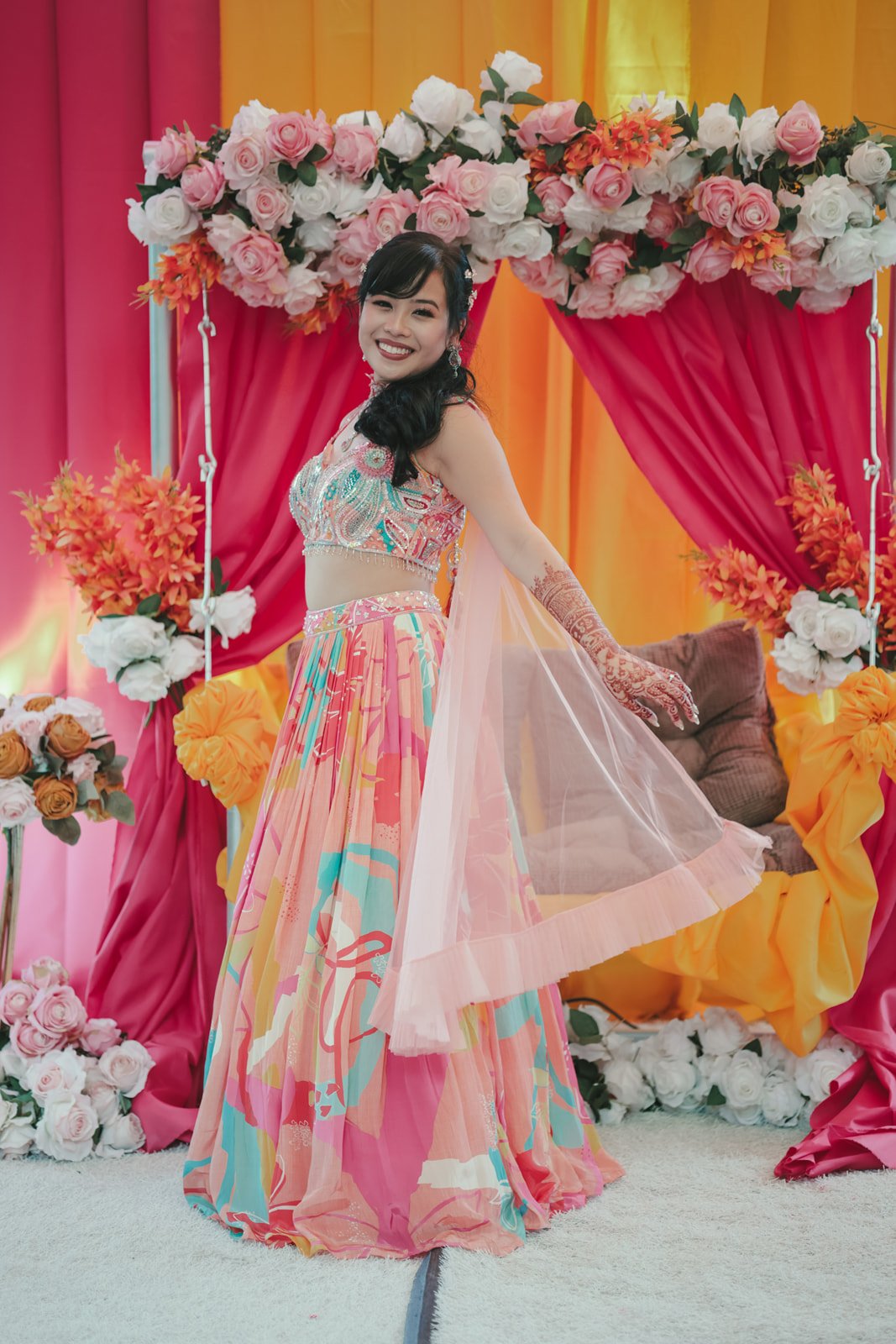
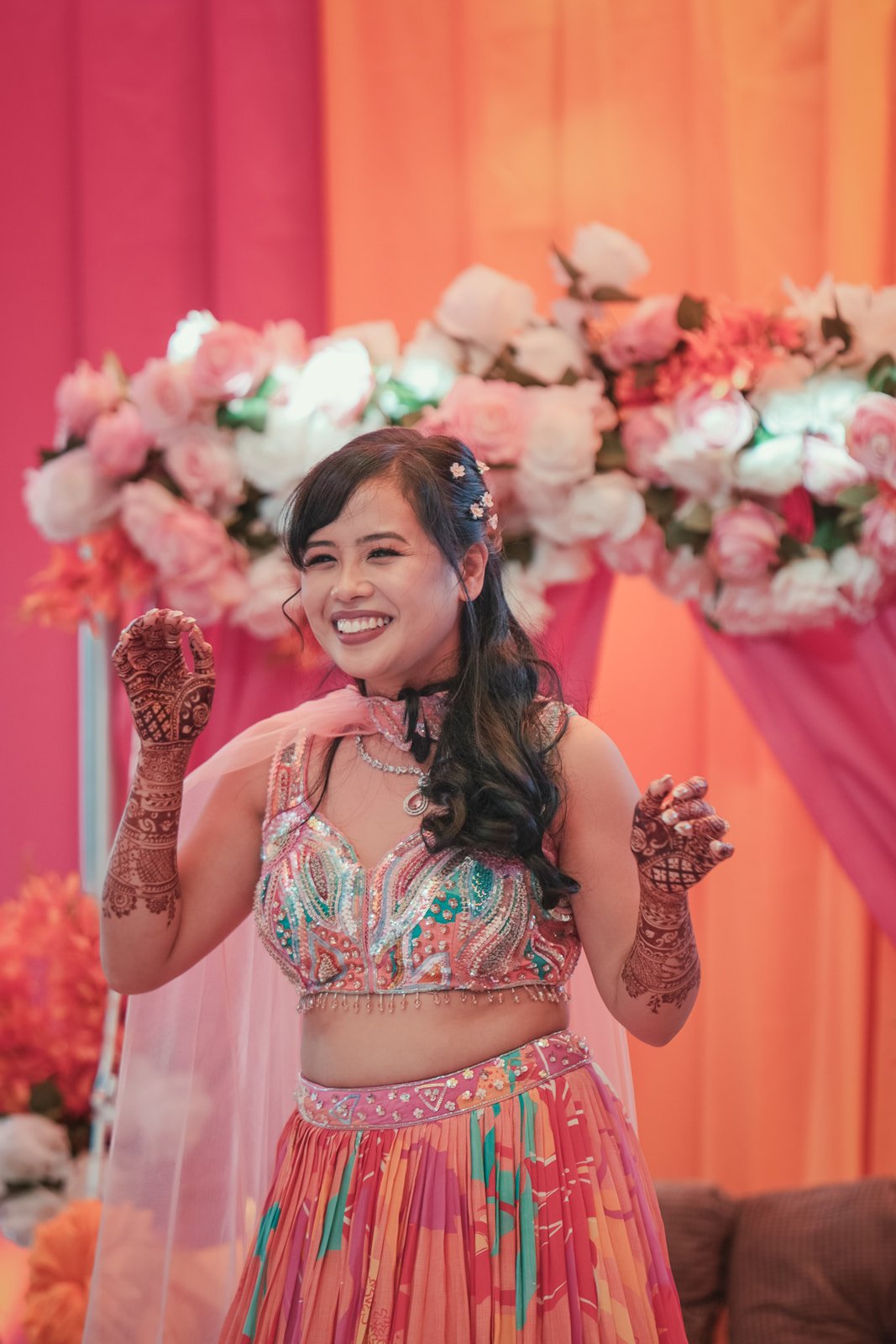
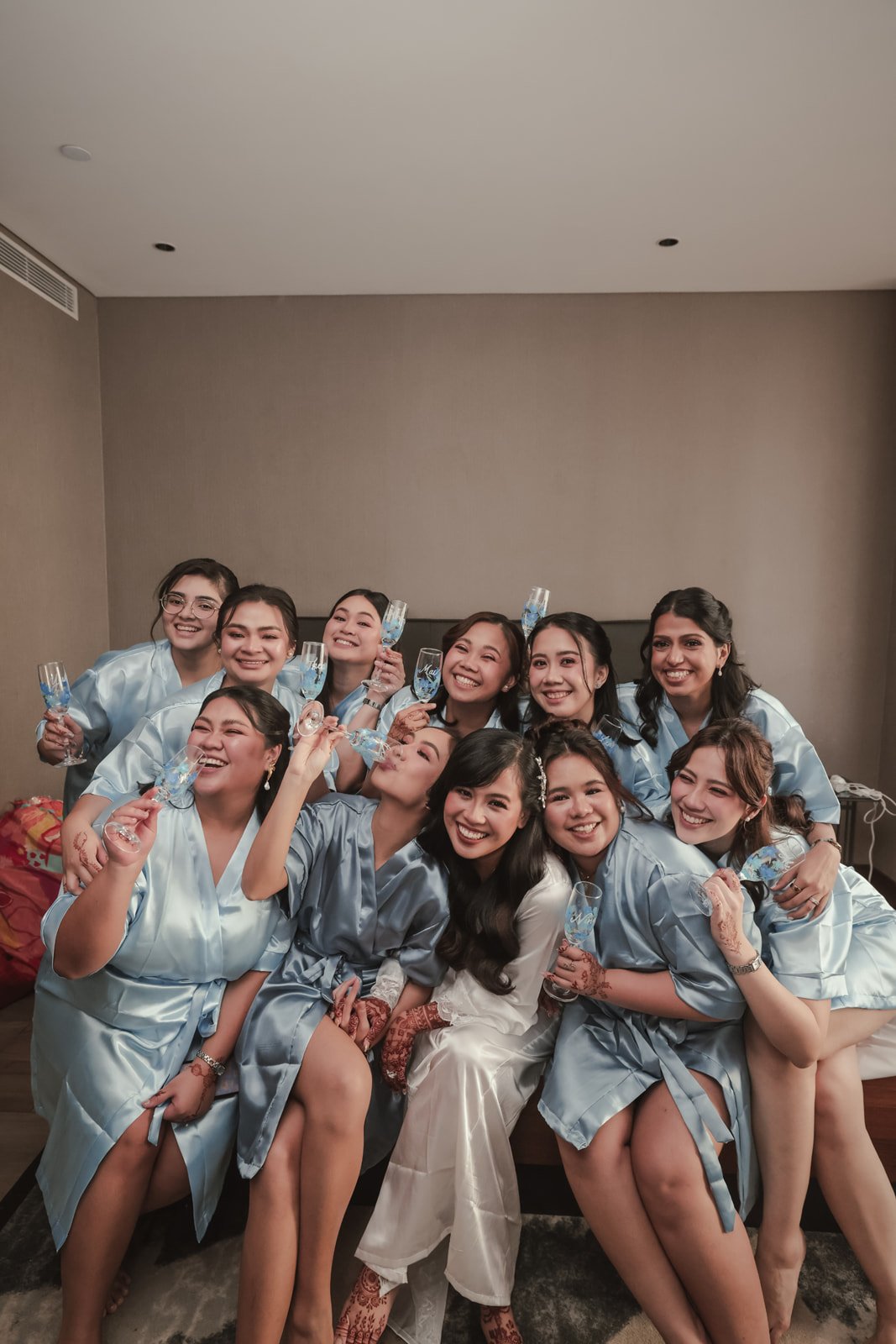
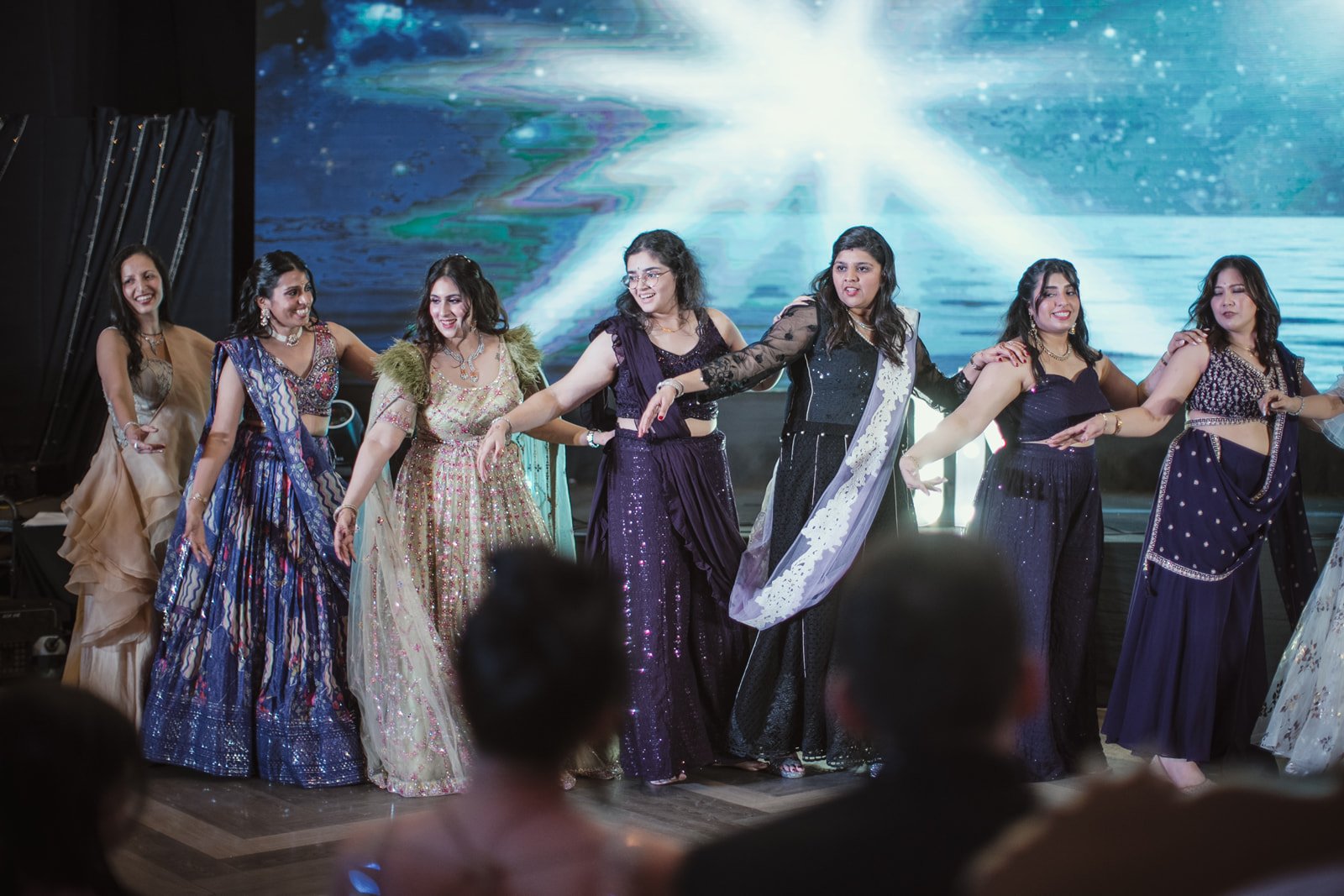
The highlight was a surprise dance from Meg and her bridesmaids, clearly rehearsed in secret for weeks. That is the good stuff. You can’t schedule it, you can’t direct it, and you absolutely cannot miss it, because it happens once and every person in the room is watching the same thing at the same time. Those are the frames I’d run into a burning building for.
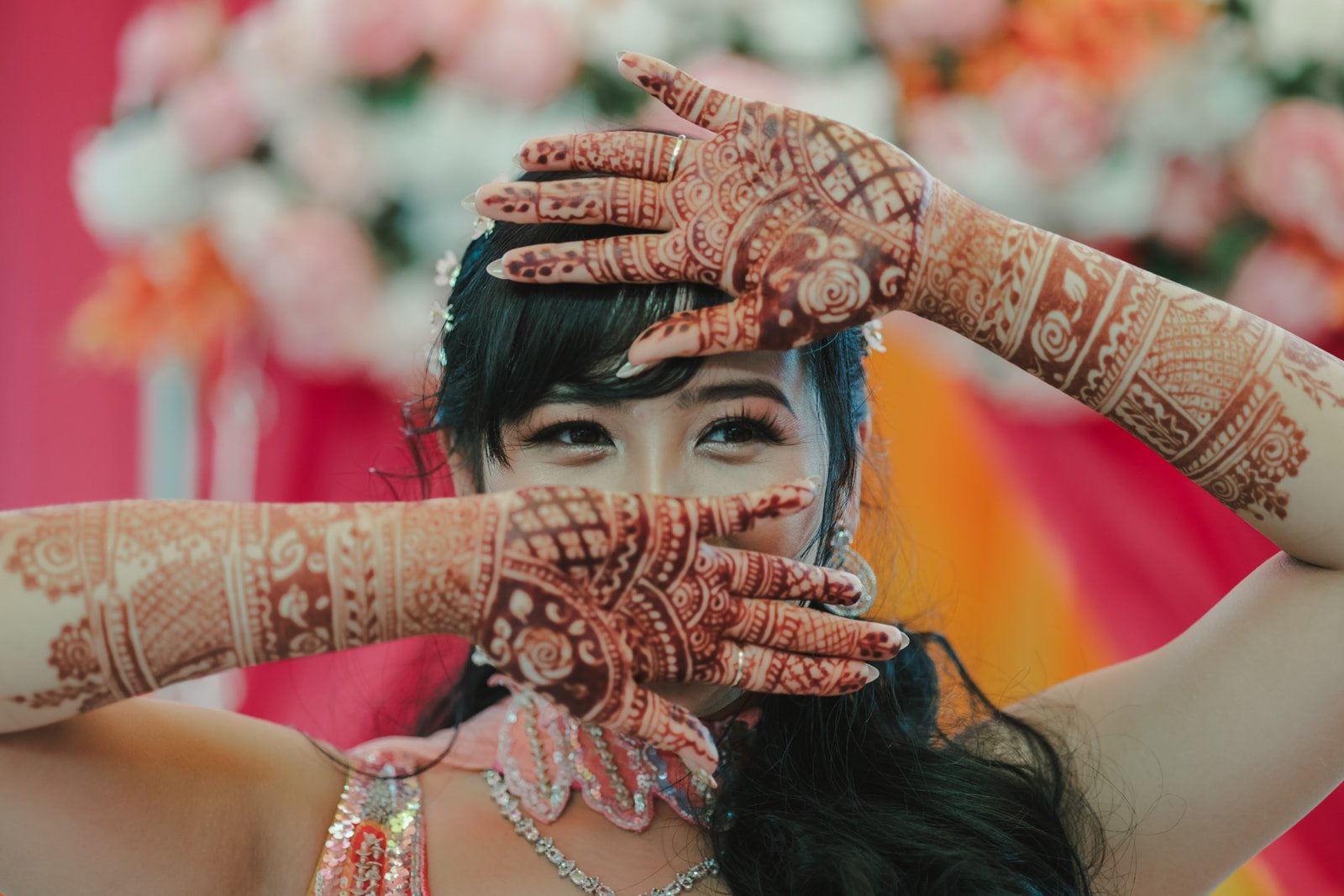
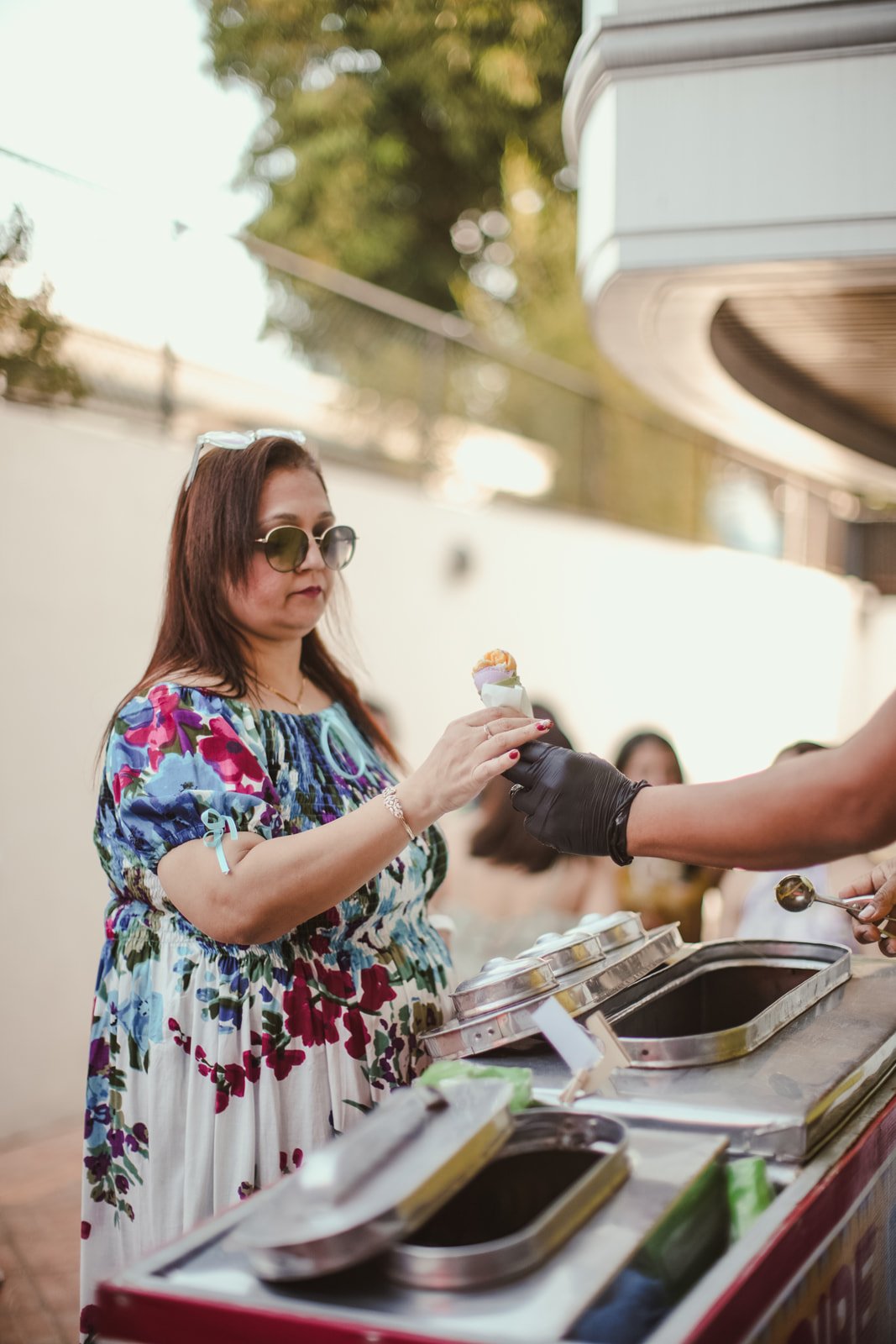
Meanwhile the henna was going onto Meg’s hands, the food was outstanding, and there was sorbetes. Actual dirty ice cream, at an Indian wedding, in Magallanes. The Philippines showing up to the party with its own snack, which is the most Filipino thing that could possibly have happened.
Then It Kept Going
The afternoon dancing wasn’t the finish line.
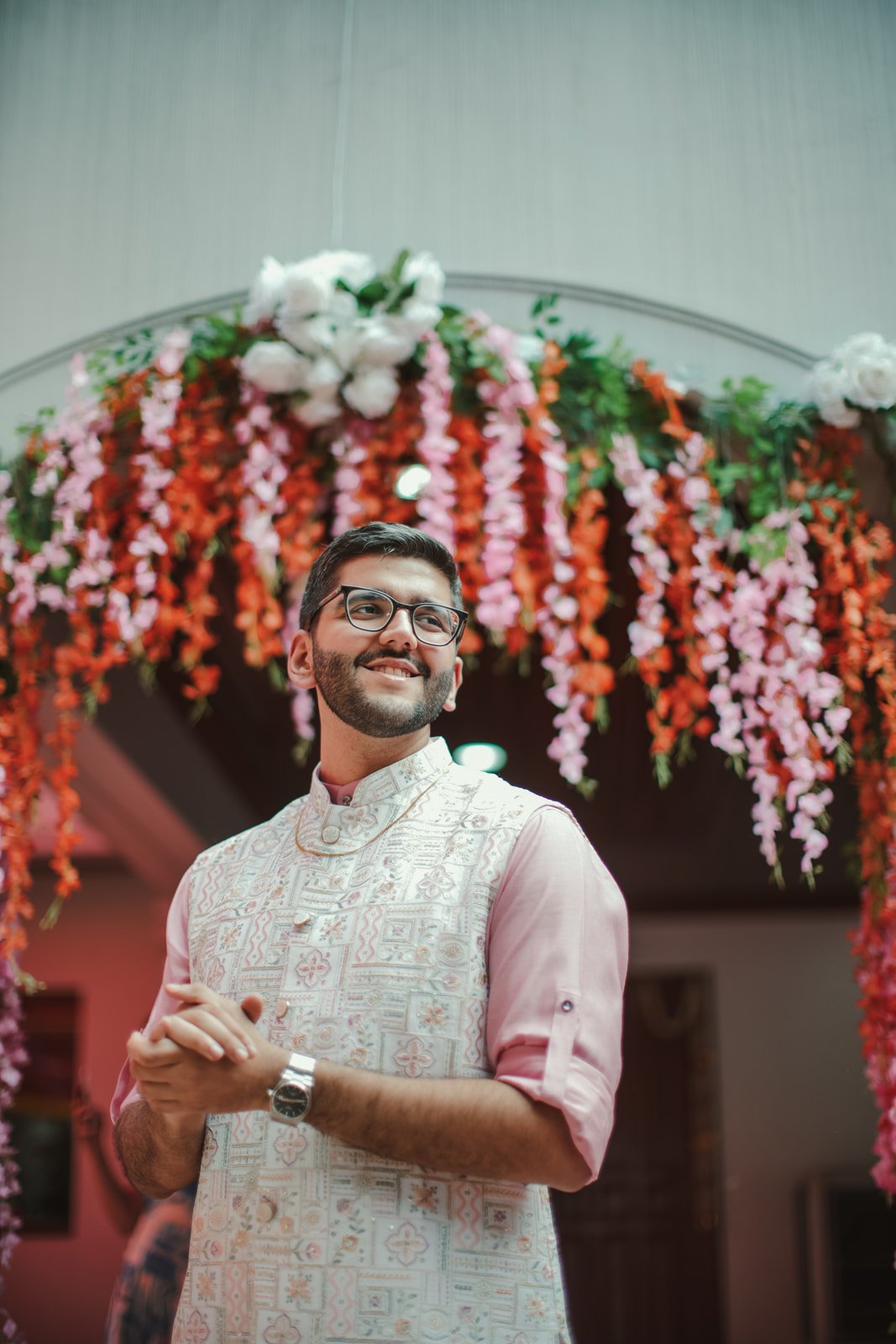
That evening we moved inside the house for a ceremony for the groom, quieter and more intimate and a completely different mood. One day, two energies, both worth documenting properly.
By the time we packed up, the mehendi was set on Meg’s hands and I was doing mental math on day three.
Day 3: The Longest Shooting Day I’ve Had in Years
Let me lay out the schedule so you can appreciate the scale of this thing:
- 7 a.m. call time, getting ready with the bride and groom
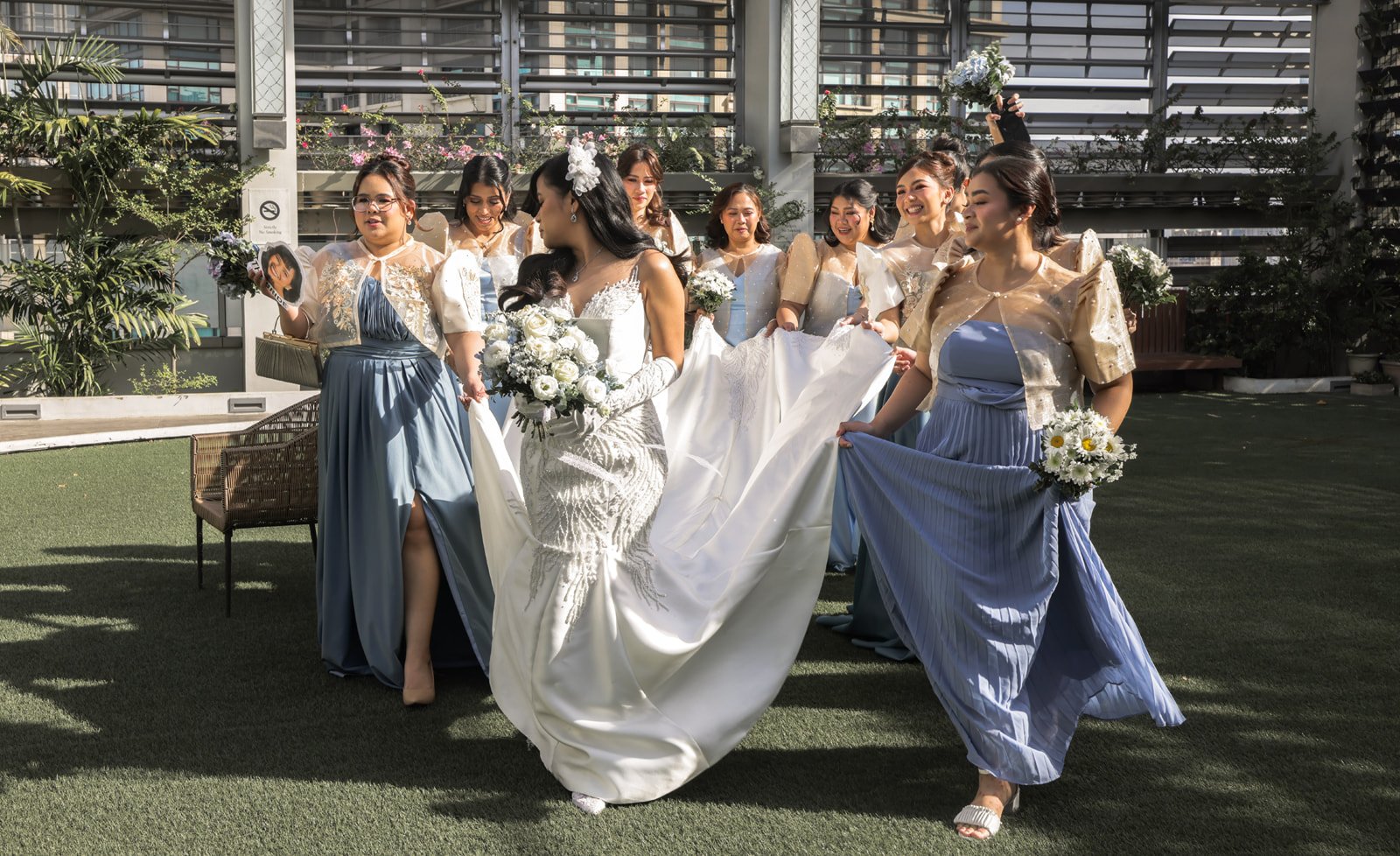
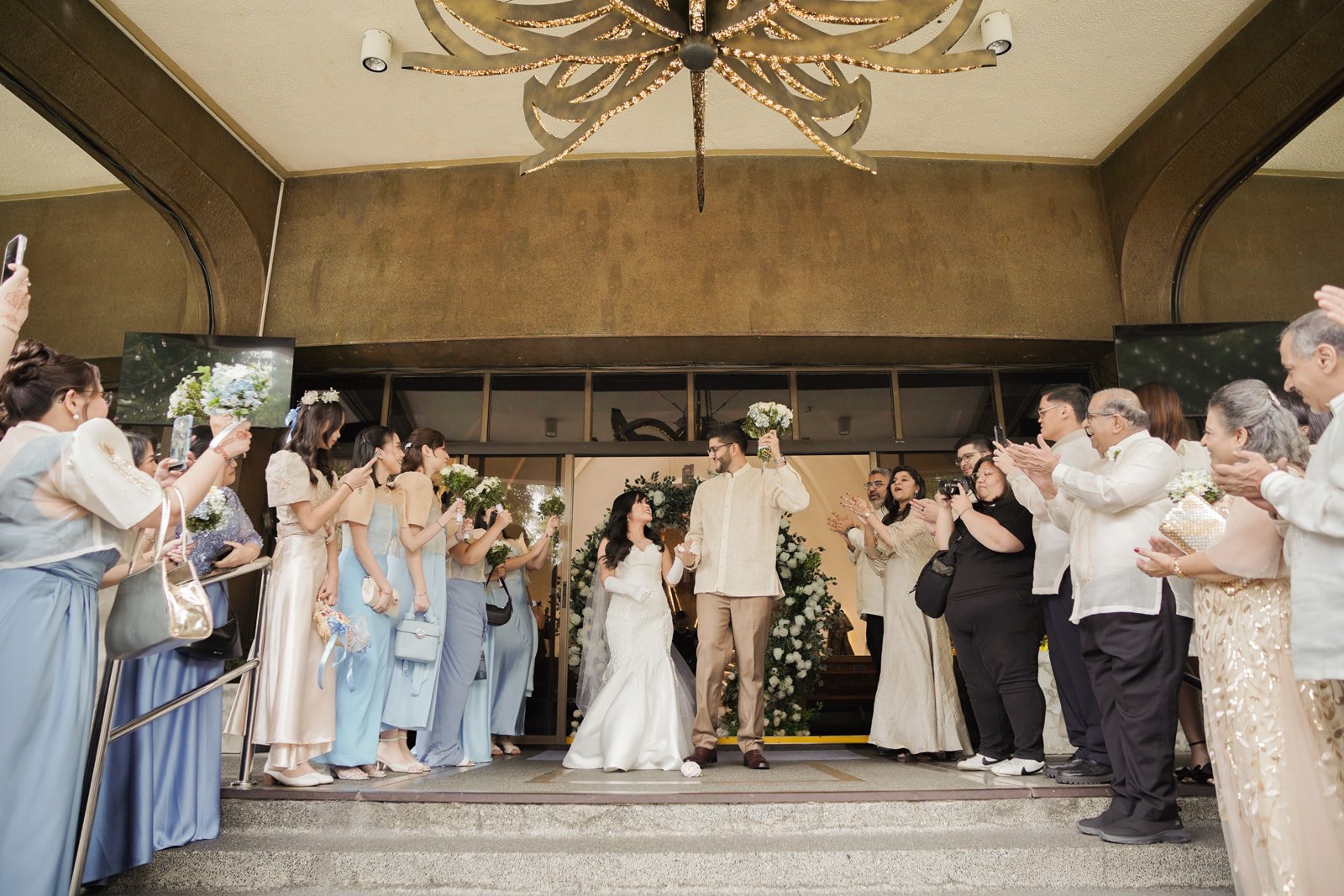
- Christian ceremony at Don Bosco Parish in Makati
- Lunch reception at Dusit Thani Makati
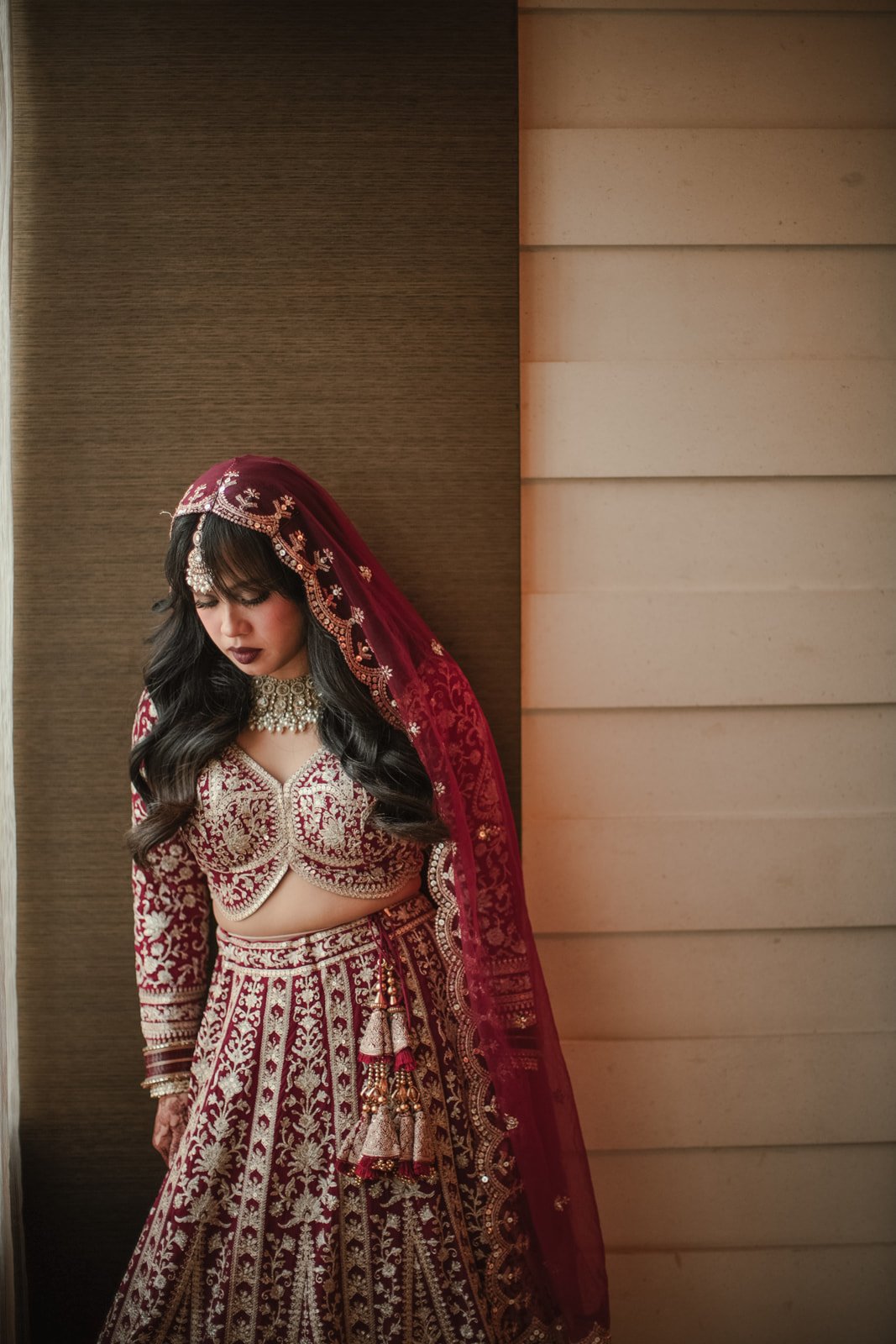
- Back to the hotel rooms to change into Hindu ceremony outfits
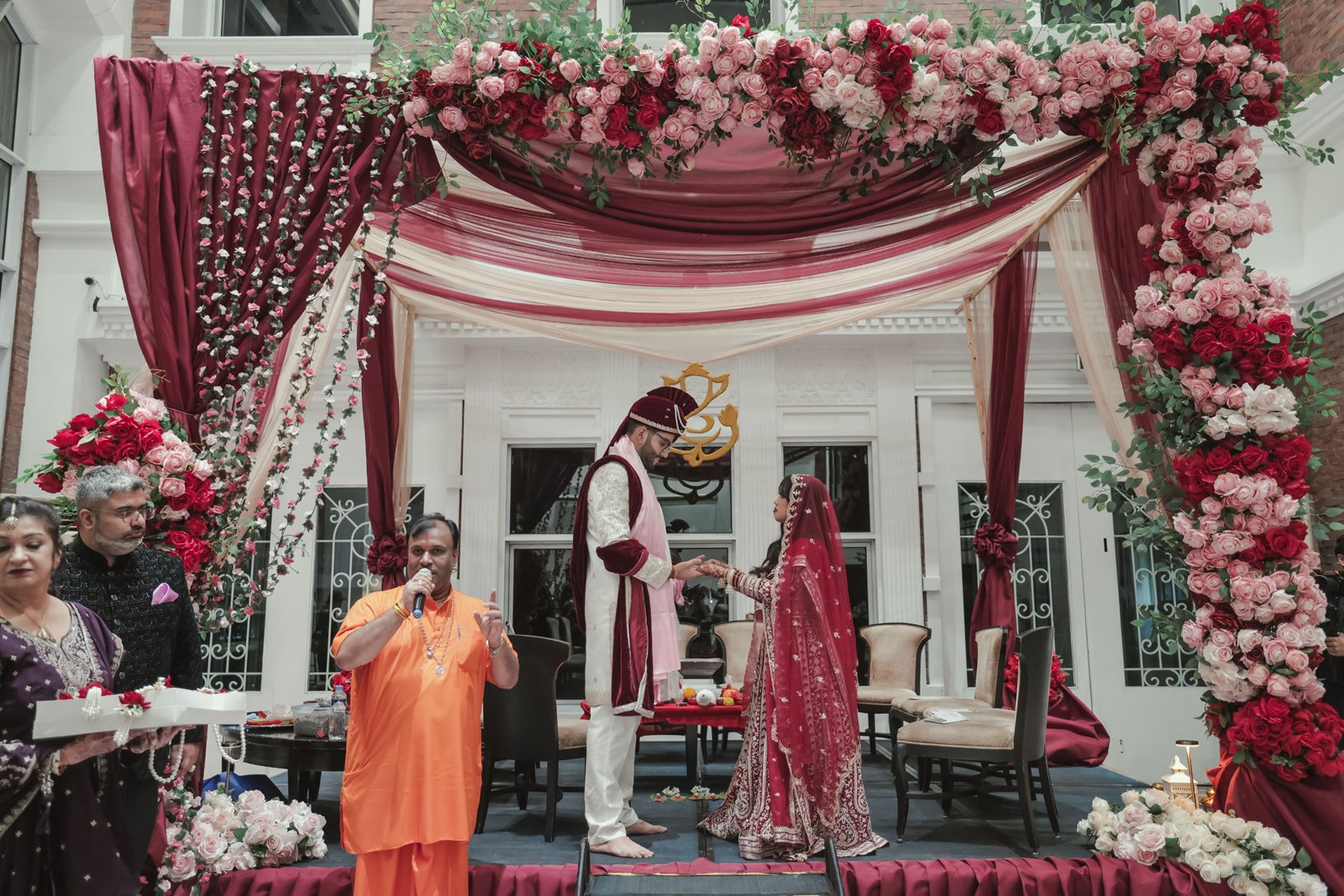
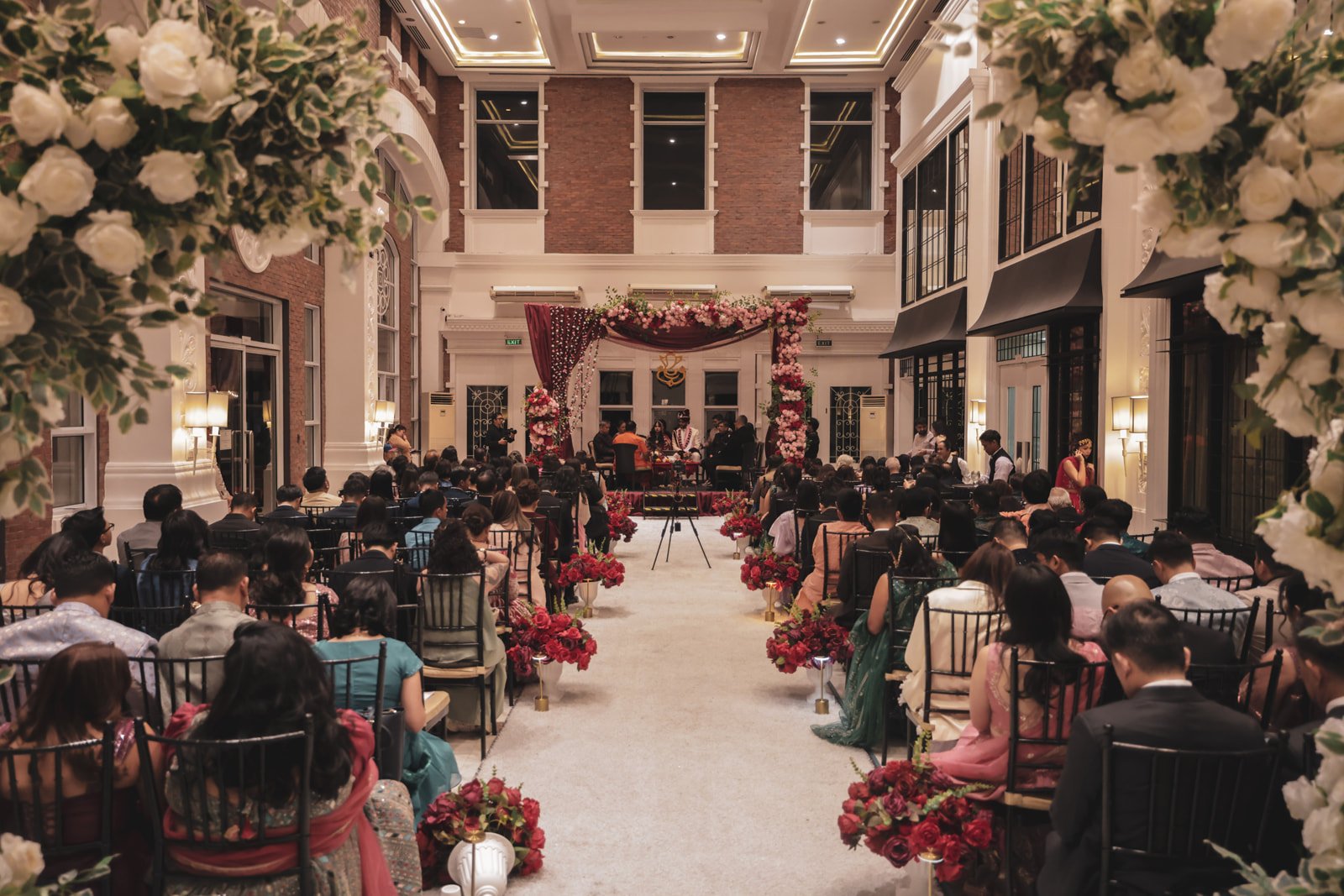
- Drive to Enderun in McKinley Hill, BGC
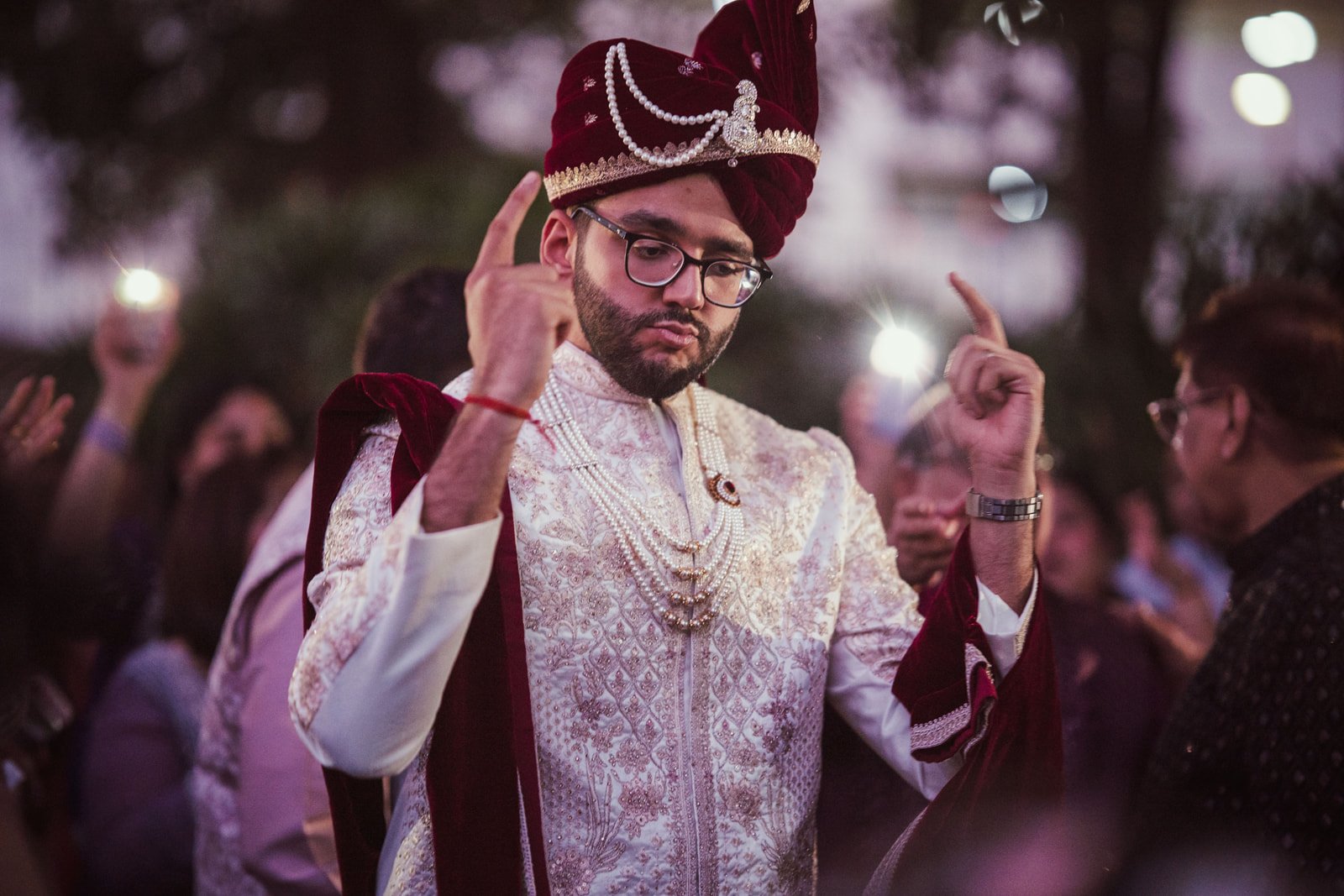
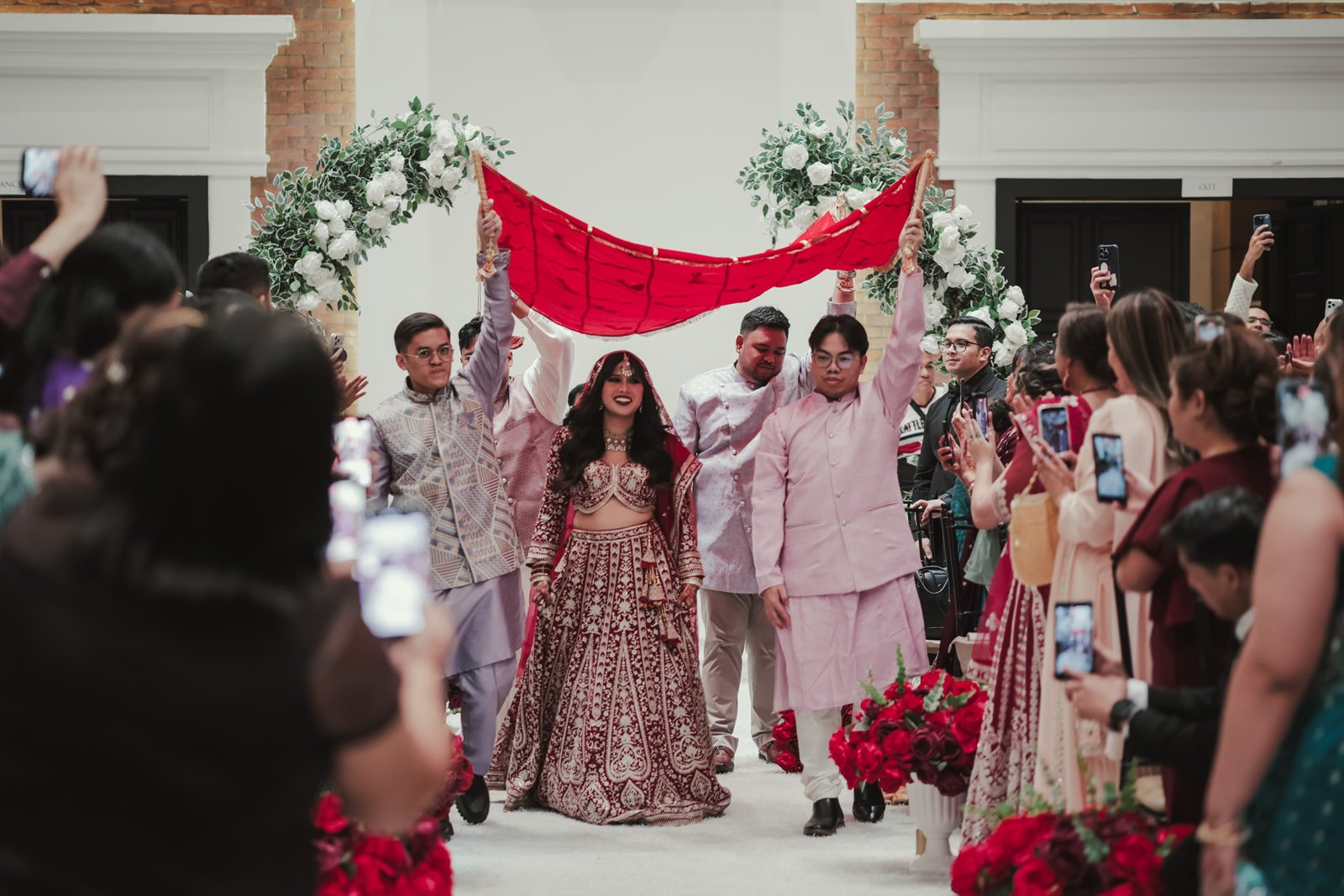
- The Baraat
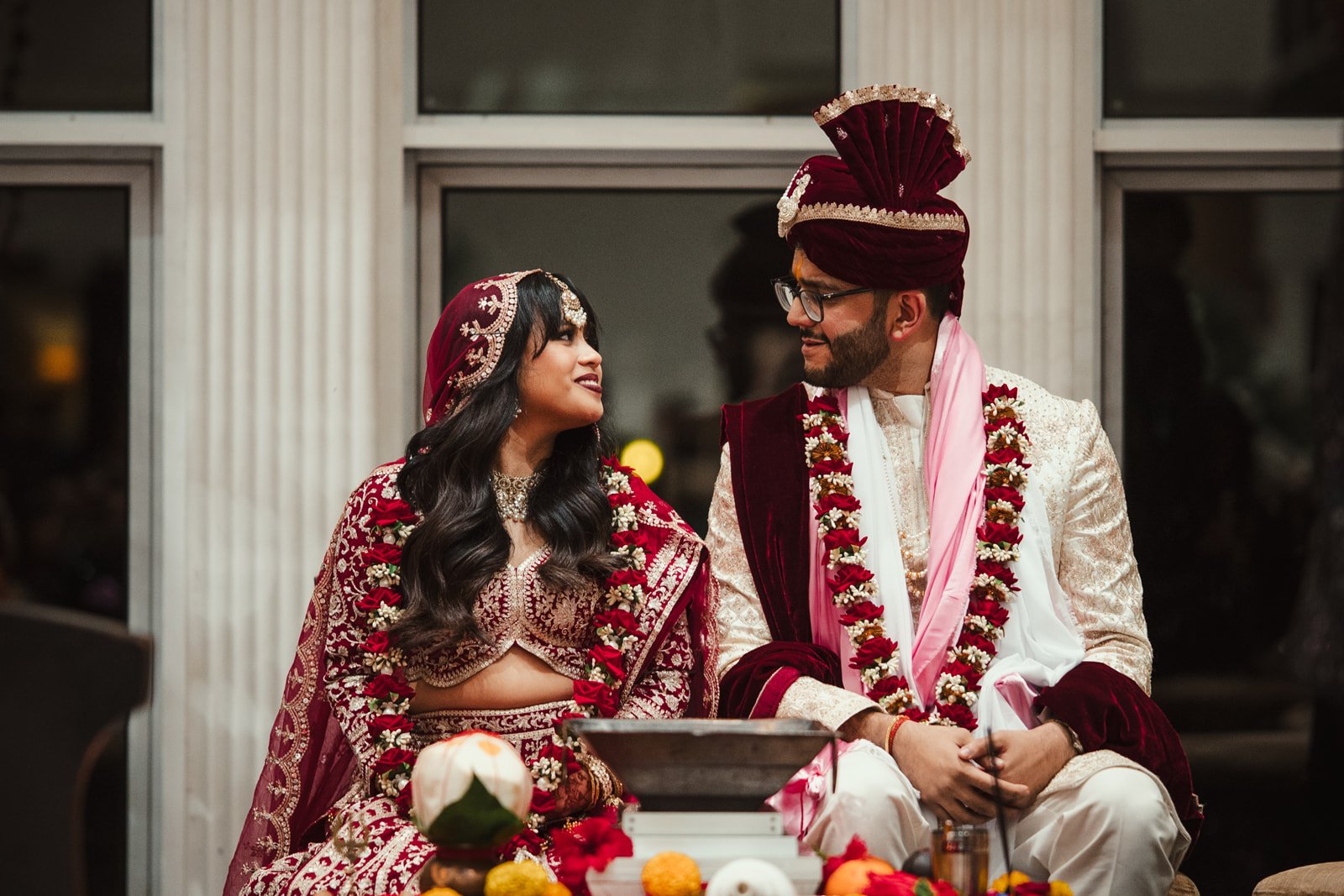
- The Hindu ceremony
- Dinner reception
- Done sometime after midnight
Two ceremonies. Two receptions. Two full outfit changes. One day. Plus a same day edit due before the night was over, because apparently I hate myself.
The Vows Nobody Else Got to Hear
Right after the church ceremony at Don Bosco, Dhiren and Meg did something I loved.
They slipped away, just the two of them, and read their vows to each other privately.
We recorded it for them. It belongs to them. It’s not going in the highlight reel, it’s not going on Instagram, and it’s not going in this blog post either. Some moments are for the couple and nobody else, and knowing which ones those are is a bigger part of this job than most people realize.
I’ll say only this: it was the quietest ten minutes of a very loud three days, and it may have been the best part.
Lunch, Then the Baraat
Lunch at Dusit Thani Makati is where I start doing arithmetic in my head. Battery. Card space. Remaining human energy. The answer at that point was: enough. Barely. Ask again in three hours.
Then we got to Enderun and the Baraat started.
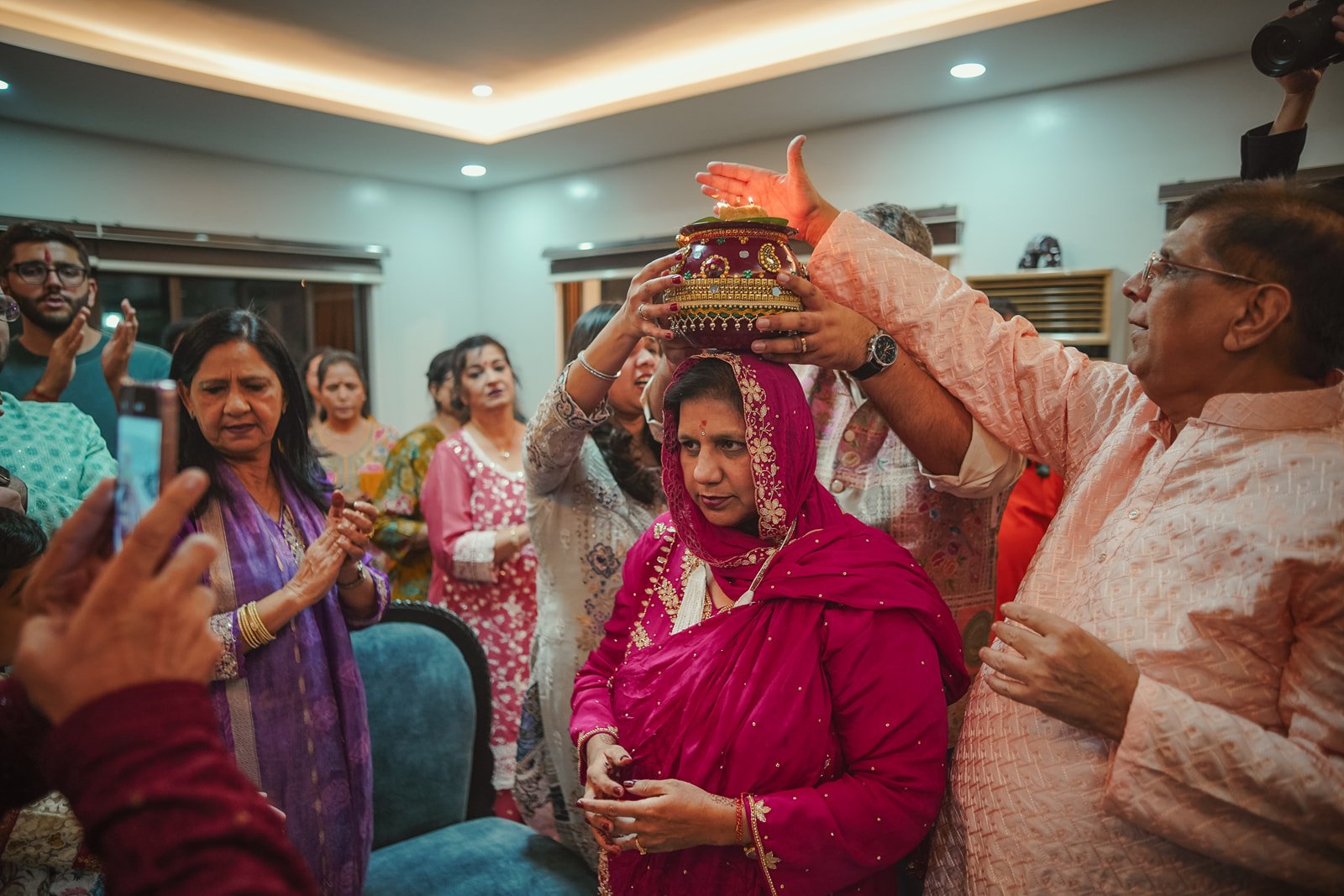
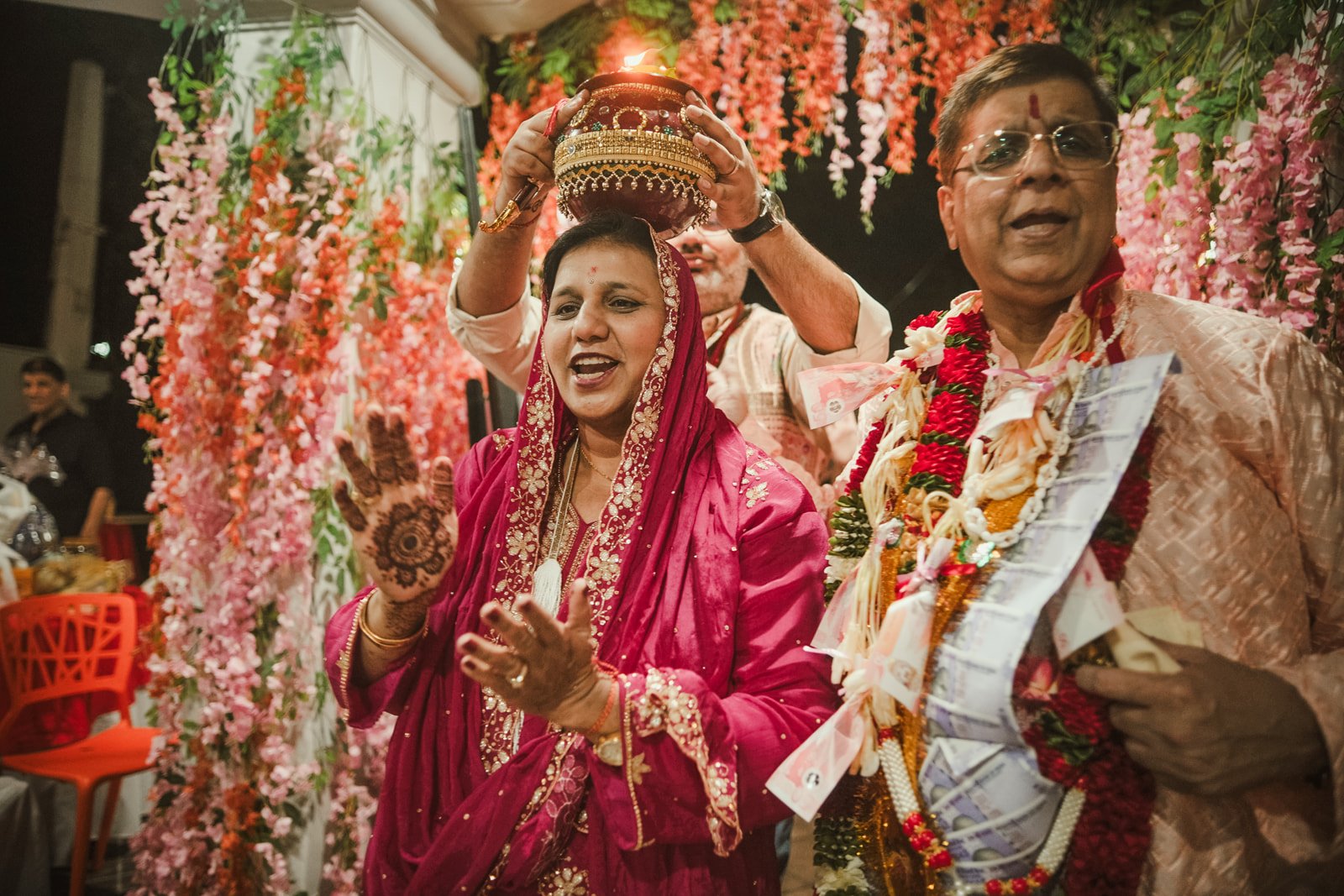
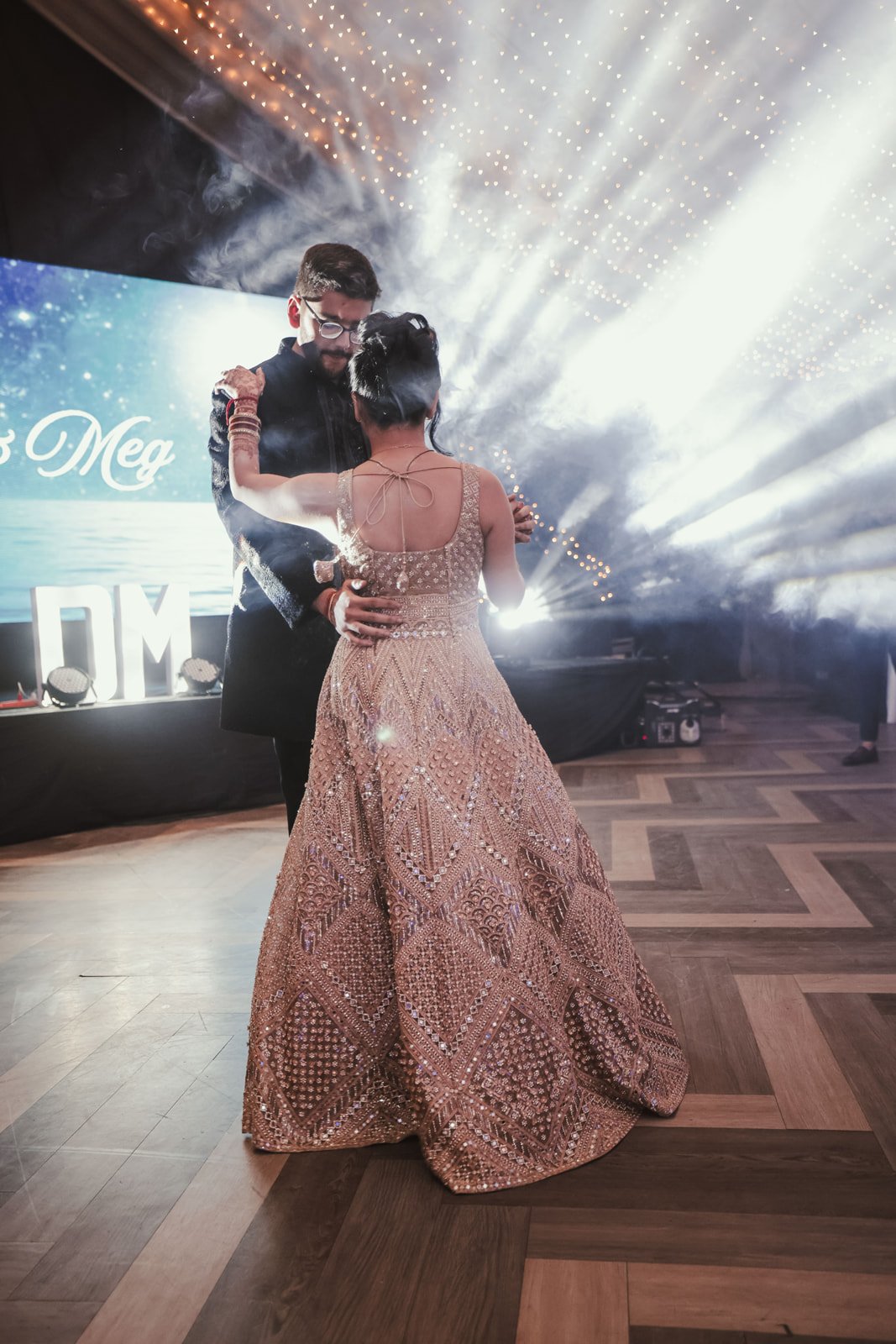
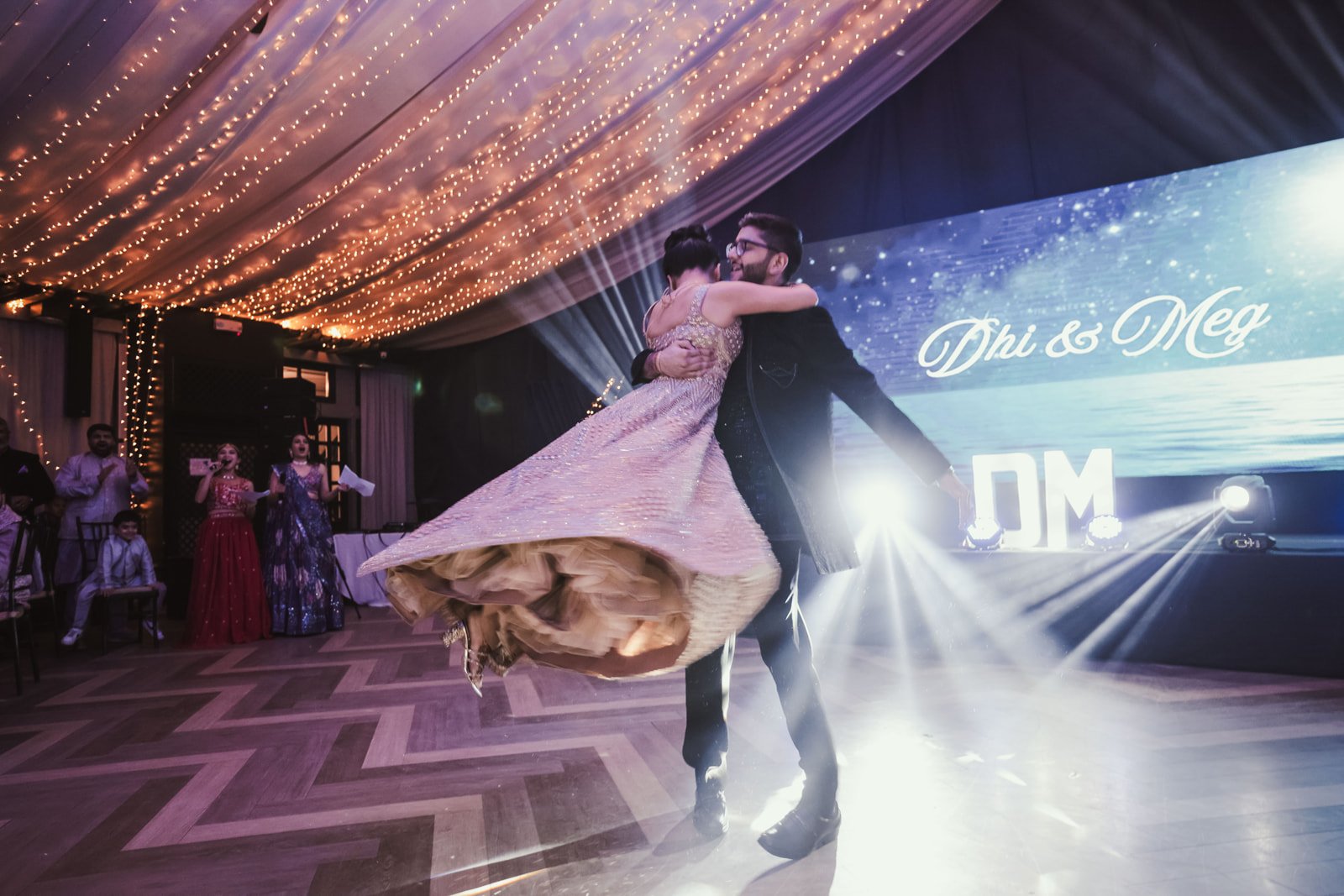
If you don’t know, the Baraat is the groom’s procession. Dhiren arrives with his people and everybody dances him in. Drums, music, an entire crowd moving as one loud organism. It’s impossible to fake and impossible to stage, and as a cinematographer it’s one of the best sequences you will ever get to film.
It also fully wakes you up, which turned out to be extremely convenient given what I had to do next.

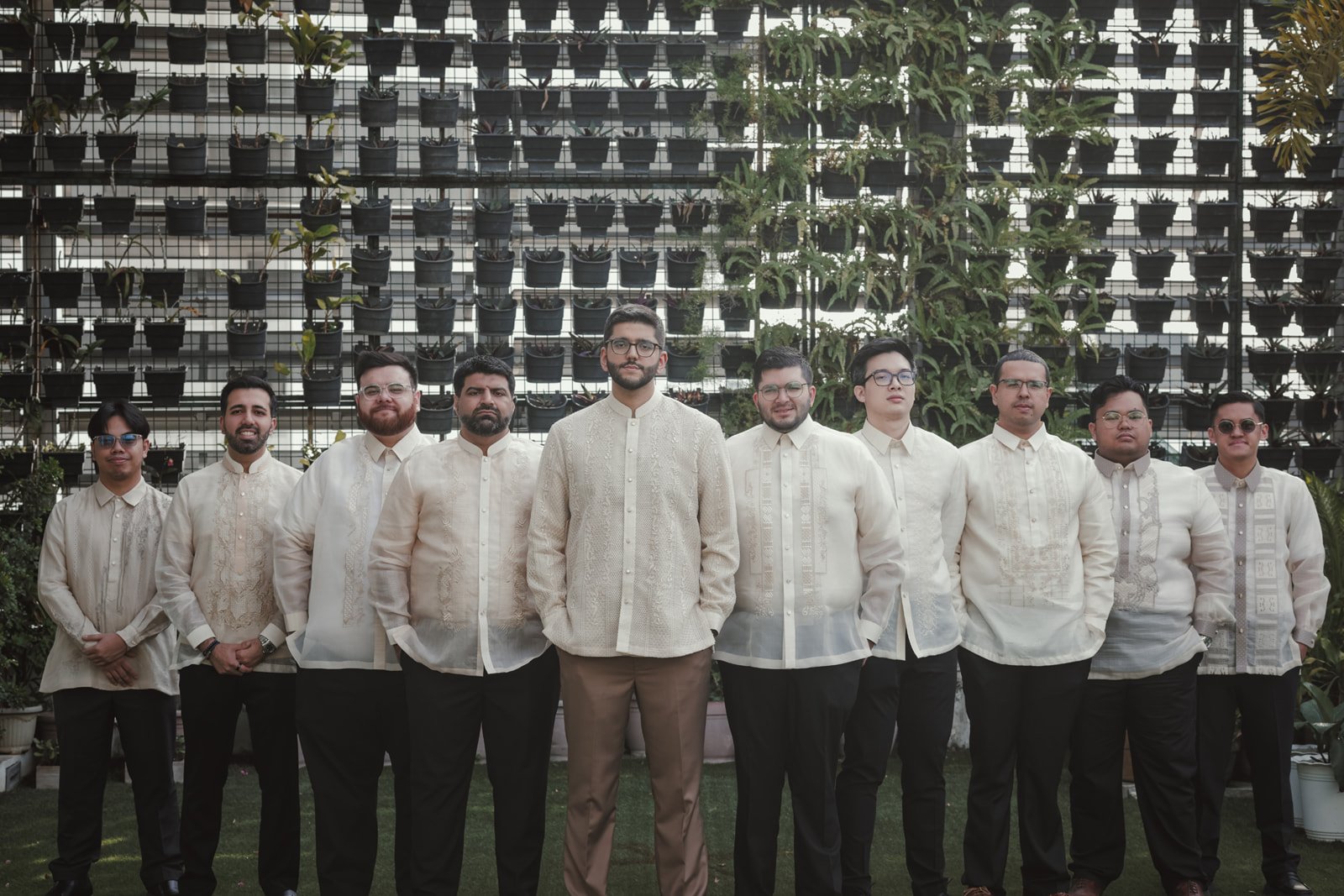
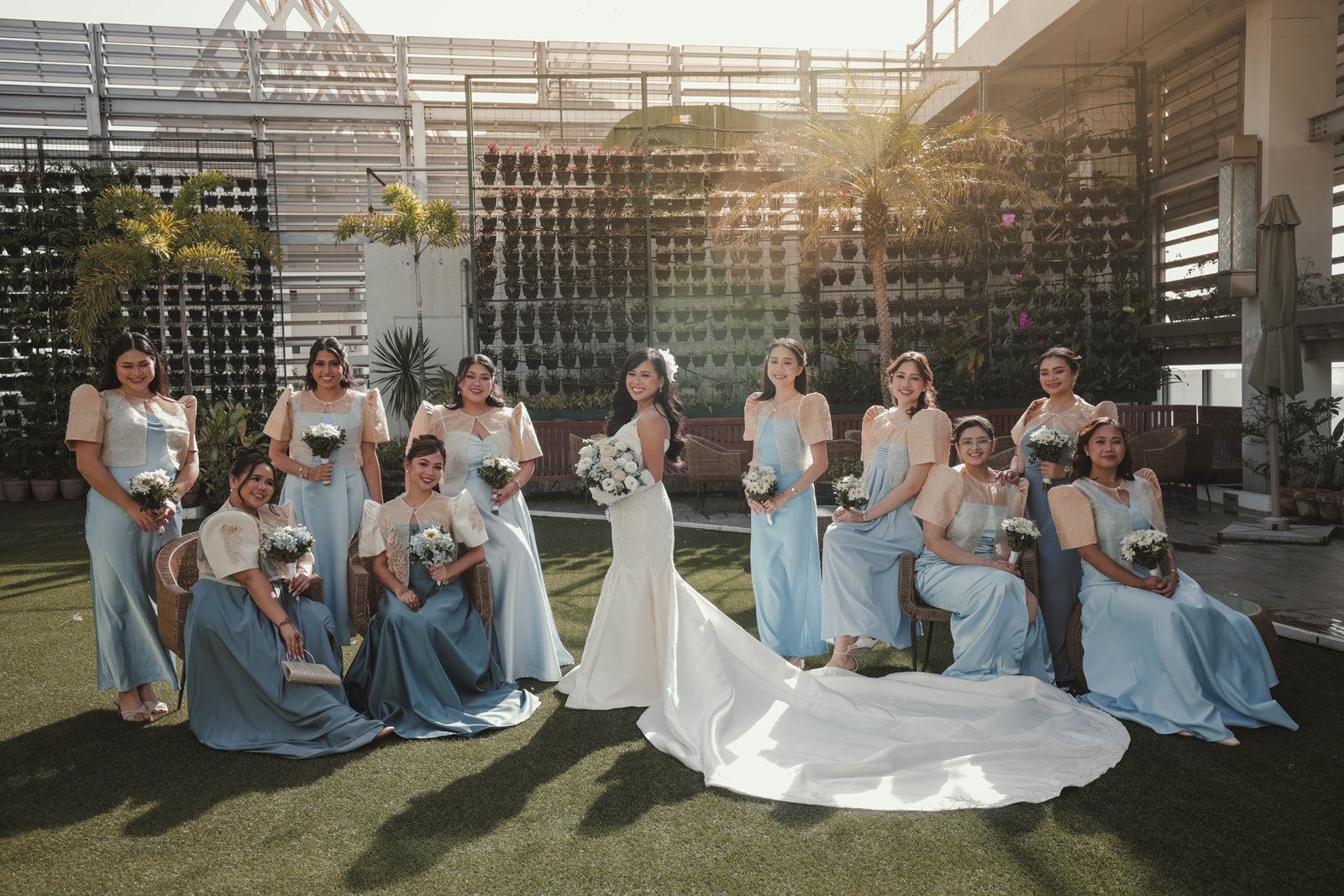
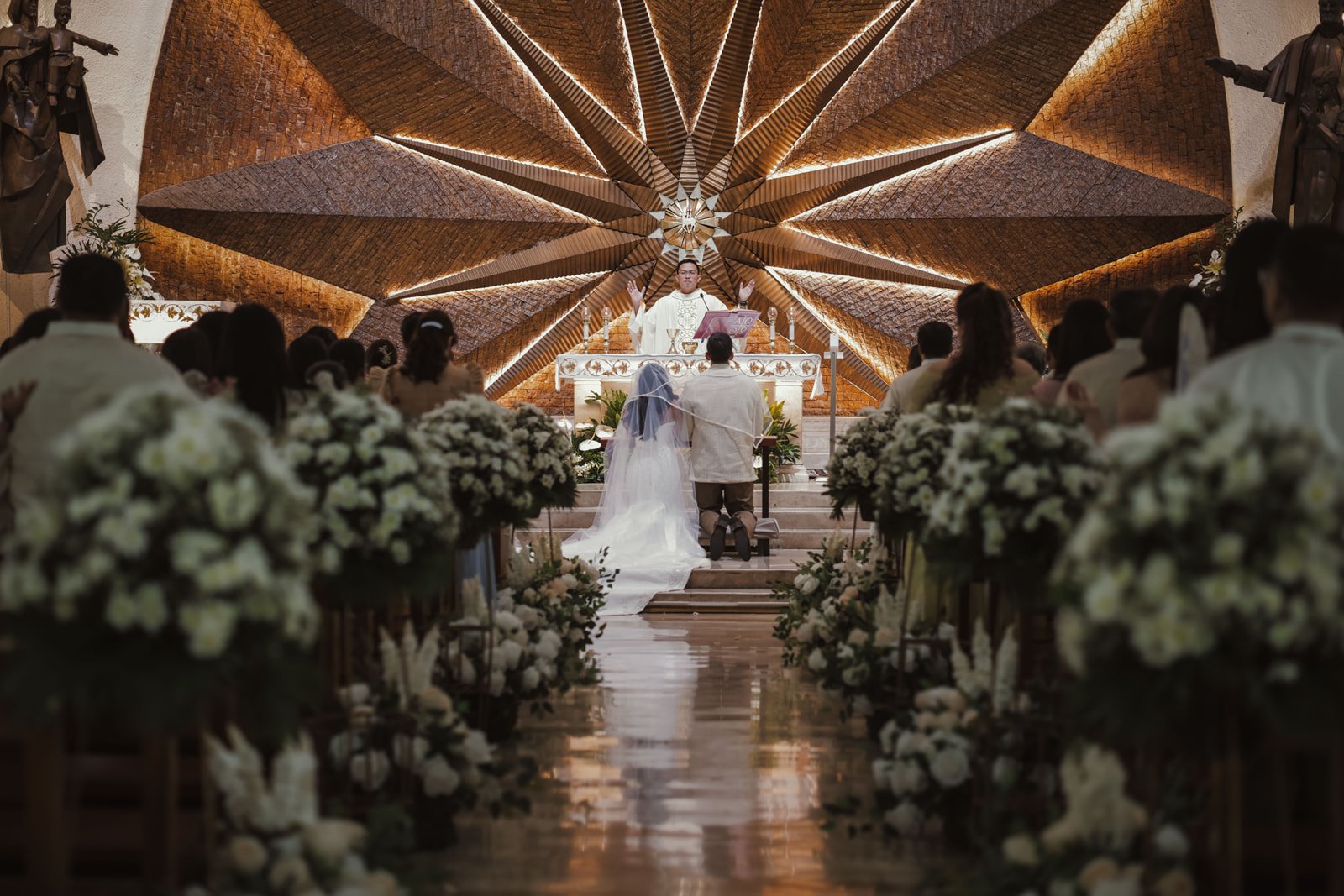
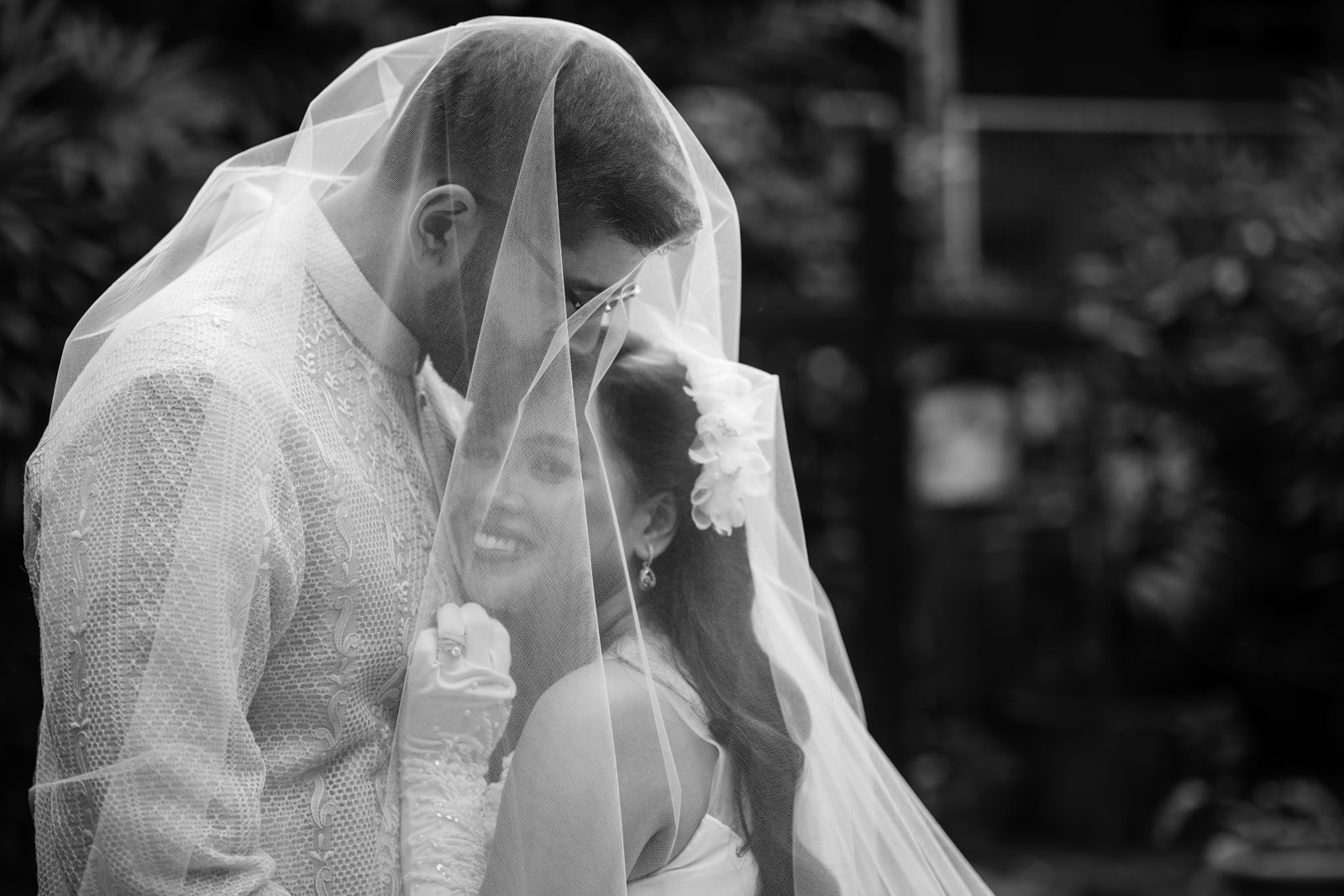
The Two-Hour Same Day Edit (My Personal Record)
Here’s the part I’m still a little proud of.
While the Hindu ceremony was underway at Enderun, I sat down and cut the same day edit.
For anyone who doesn’t live in this world: a same day edit is a full cinematic film of the wedding, shot that day, edited that day, screened at the reception that same night. It’s one of the most stressful things a wedding filmmaker can offer, because there is no such thing as “I’ll fix it next week.” The screen turns on at a specific hour whether you’re finished or not.
Normally I want a comfortable window for this. On day three, with a 7 a.m. call time already behind me, I had two hours.
Two hours to pull footage from the morning prep, the church, the lunch reception, and the Baraat, then shape it into an actual story instead of a pile of pretty clips.
Editing a wedding film while a sacred ceremony unfolds forty feet away is a specific kind of multitasking they don’t cover in film school.
I finished right as Dhiren and Meg’s entrance was about to begin. Closed the laptop, picked up the camera, shot their entrance, and then later that night stood at the back of the room while the film played.
They loved it. The room made that noise you always hope for, the one that tells you people are genuinely watching instead of politely waiting for dinner.
That’s the whole job. That’s why I still do this at 47 with knees that have started expressing opinions about long days.
Walking Home at 1 A.M.
The reception finished after midnight and I fully expected to be a corpse.
Here’s the thing nobody warns you about: weddings like this don’t drain you. They charge you. Something about standing inside that much joy for that many hours in a row leaves you wide awake at an hour when you have no business being wide awake.
So instead of pouring myself into a car, we walked home. Our condo was a few blocks from Enderun, so we strolled through BGC at one in the morning. Well-lit streets, quiet, completely safe. It felt like walking through Dubai at night, which is not a comparison I get to make about many places.
Sixteen hours of shooting behind me and I was wandering home like a man who’d had a light afternoon.
The next morning was a different story. The next morning, my body filed a formal complaint.
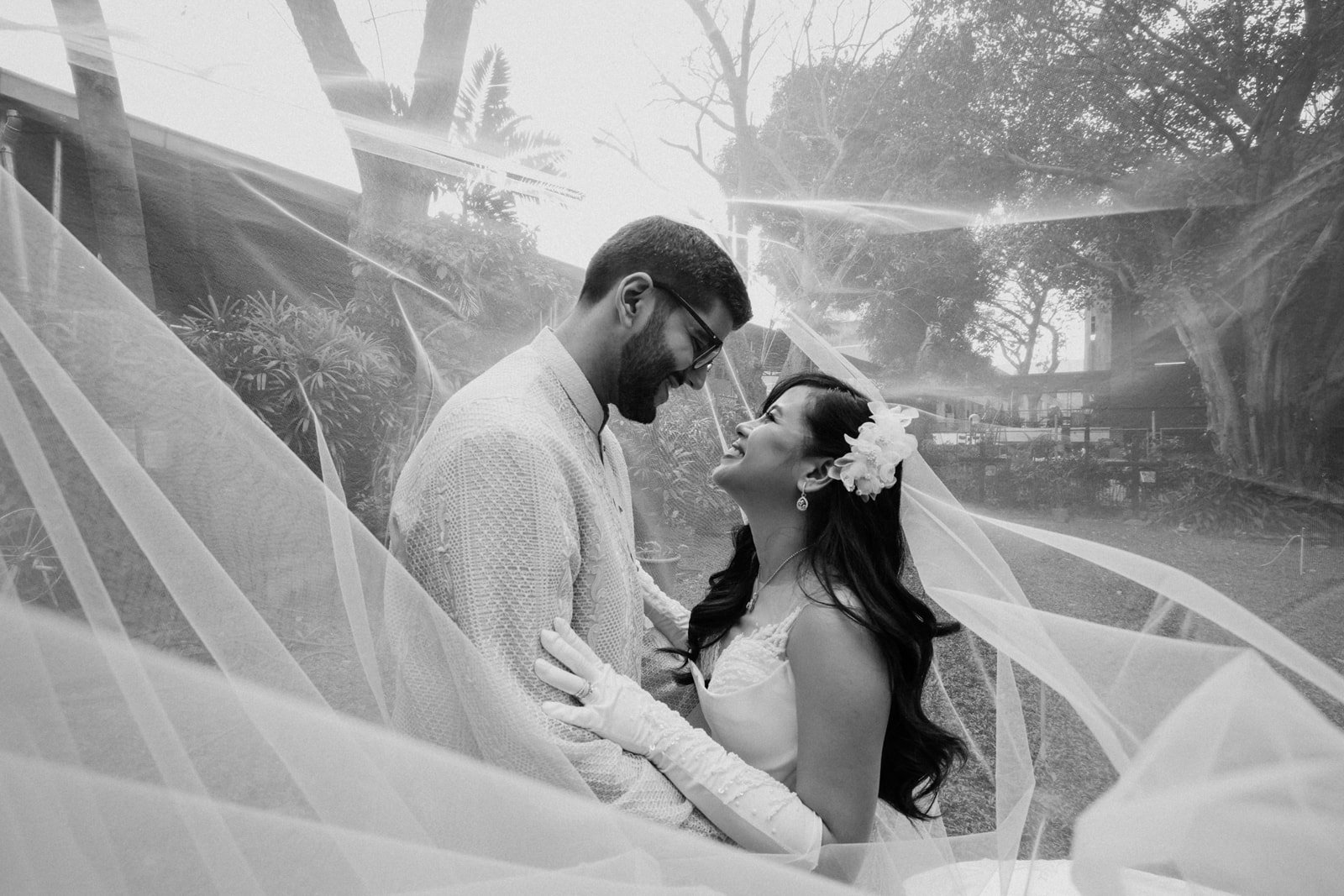
About Dhiren and Meg
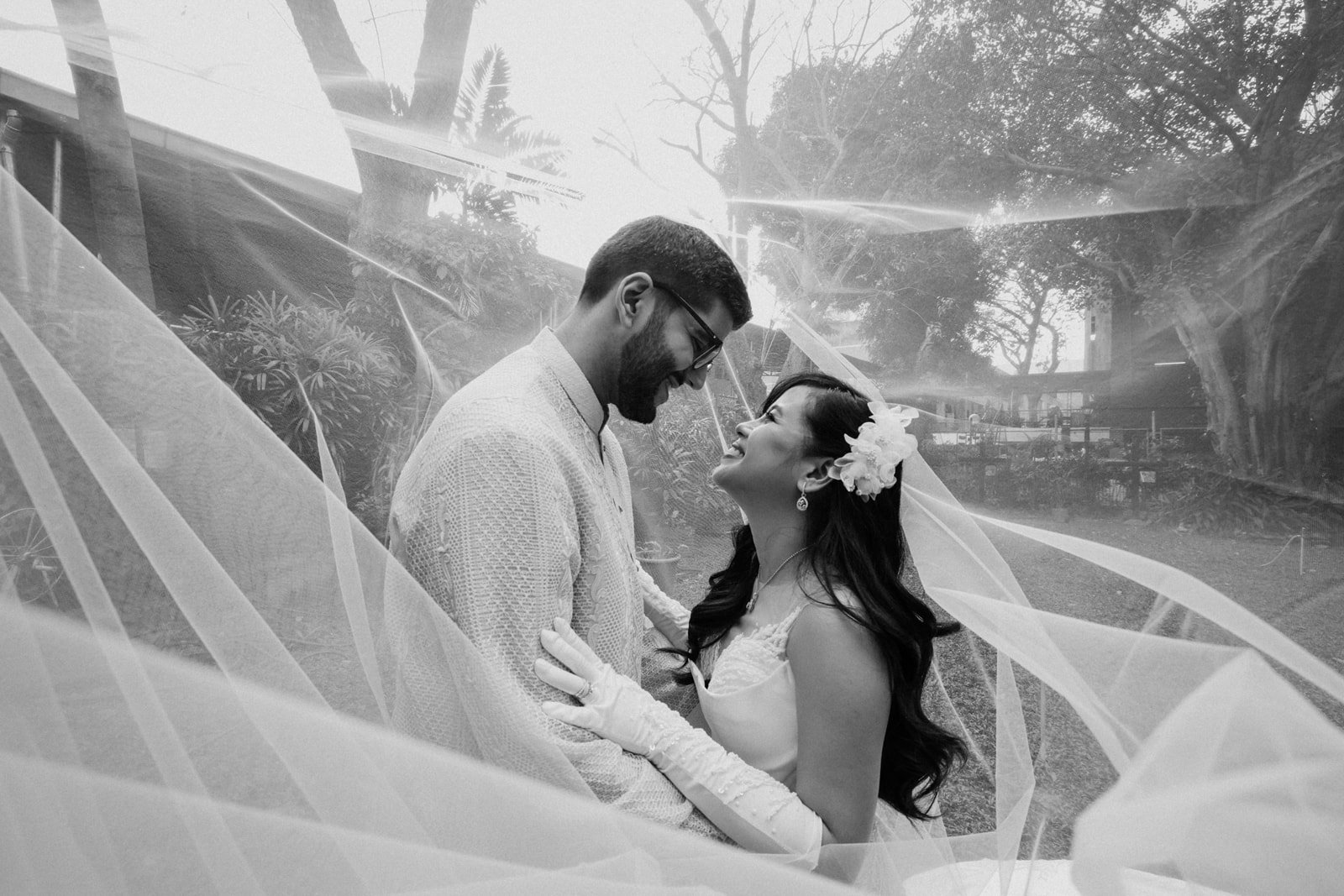
I should tell you about them, because the wedding was gorgeous and the couple is the actual story.
Theirs was a long distance relationship across two different cultures, which sounds romantic in a movie trailer and is mostly just hard in real life. Time zones. Family expectations. The slow, unglamorous work of explaining your entire world to someone who didn’t grow up in it.
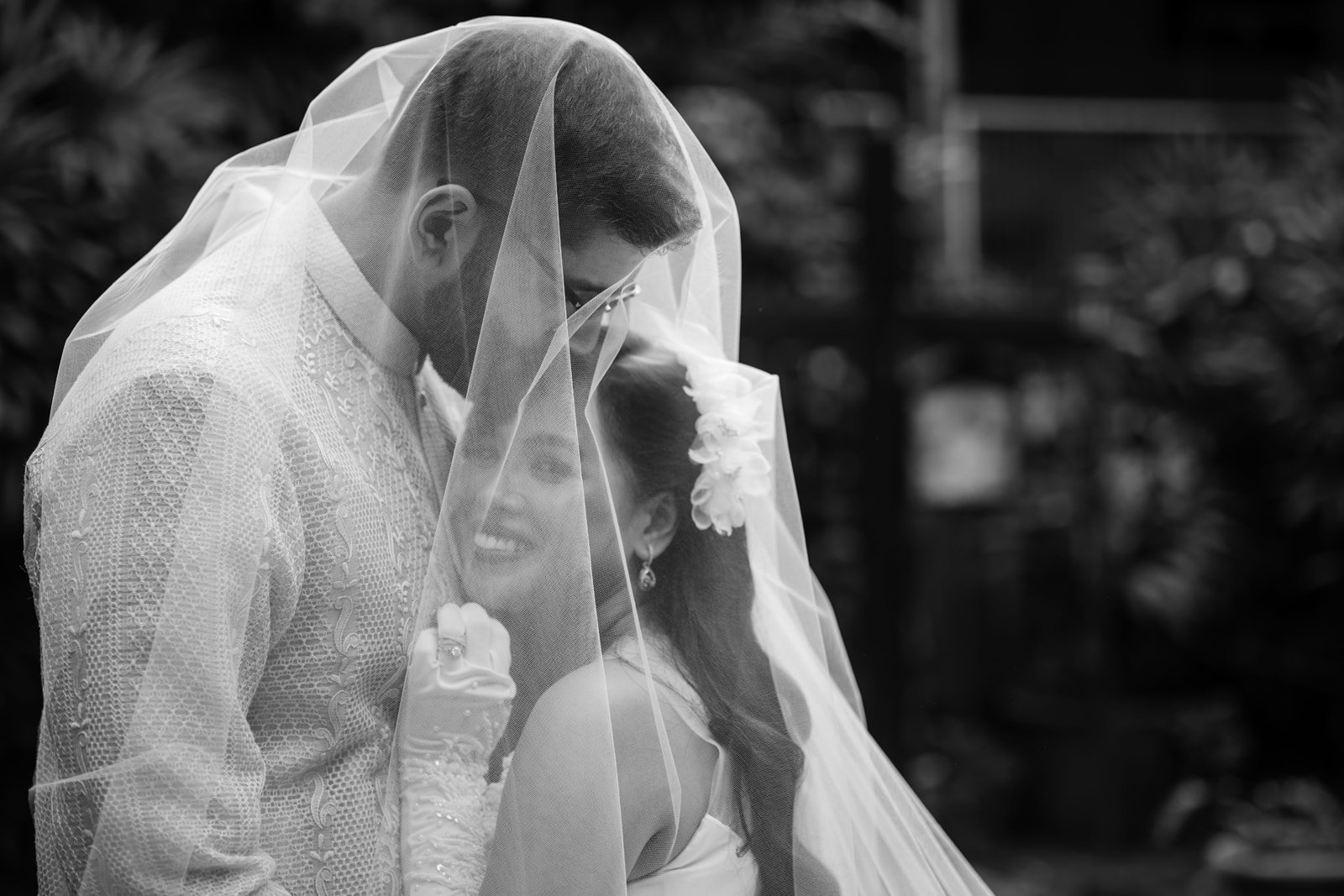
They made it work because their personalities genuinely fit. You can see it on camera. Some couples perform their chemistry the second a lens points at them. These two just have it, and my job was mostly to stay out of the way.
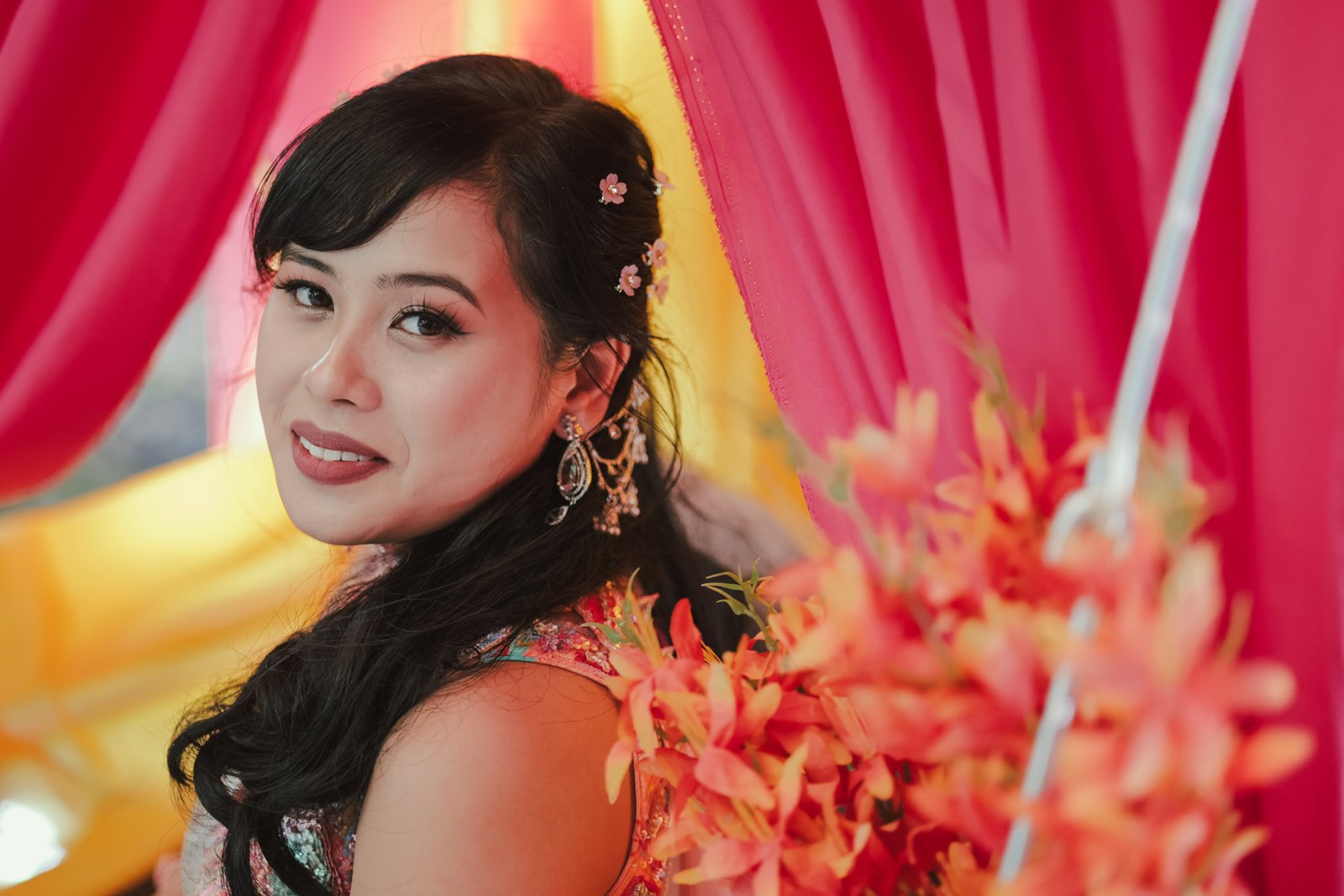
Meg was a joy to document. She paints. For her bridesmaids she hand-made personalized champagne glasses, which is the kind of gift that takes real hours and real love and cannot be bought at the last minute. She’s also fiercely competitive, which surfaced roughly one second after I brought up sports in her interview. She’s into music. She knows what she likes and she says so, clearly, without apologizing for it.
Honestly, that’s a great quality in a bride. Decisive brides make better weddings. And better photos.
A Few Things People Ask Us About Indian Weddings in the Philippines
How many days does an Indian wedding usually take? Commonly three or more. Dhiren and Meg’s ran across three days, with a separate prewedding shoot at La Luz in Batangas months beforehand.
Can you have both a Hindu and a Christian ceremony? Yes, and it happens often with intercultural couples. Theirs had a Catholic ceremony at Don Bosco Parish in Makati in the morning and a Hindu ceremony at Enderun in BGC that same evening.
Do you need a bigger team for an Indian wedding? Generally yes. Multiple events, multiple locations, and simultaneous action in different rooms mean you need enough shooters to cover it all without missing the moments that matter.
Is a same day edit possible on a multi-day wedding? It is, and we delivered one here on the busiest of the three days. It takes planning and a team that knows how to keep feeding footage to the editor as the day goes.
What I Took Home From This One
I’ve flown a long way to shoot a lot of weddings. Dubai to Mumbai, Dubai to Bangkok, Dubai to Europe, Dubai to Colombo. But there is something specific about landing in Manila, sitting in traffic you grew up complaining about, and then walking into a celebration full of color and drums and languages this city doesn’t usually hear all at once.
Seventeen years after that first wedding in Mumbai, I finally got to do this at home.
Dhiren and Meg gave me my first Indian wedding in the Philippines. They also gave me a blackout, a dance floor I could not escape, a new personal record on a same day edit, and a 1 a.m. walk through BGC that I’m still thinking about.
Worth every minute. Ask my knees, they’ll disagree, ignore them.
To Dhiren and Meg, thank you for trusting us with all three days. Congratulations, you two.
Planning an Indian Wedding in the Philippines?
If you’re planning a multi-day Indian or intercultural wedding in Manila, or anywhere else on the map, this is exactly the kind of work we live for. We’re a Dubai-based team that travels, we’ve been covering Indian weddings across the UAE, the Middle East, India, Asia and Europe since 2009, and we have a full Philippine team here in Manila led by MJ.
Send us a message and tell us about your day. We’ll ask you a lot of questions, and then we’ll tell you honestly whether we’re the right fit.
Melon Melrish Weddings